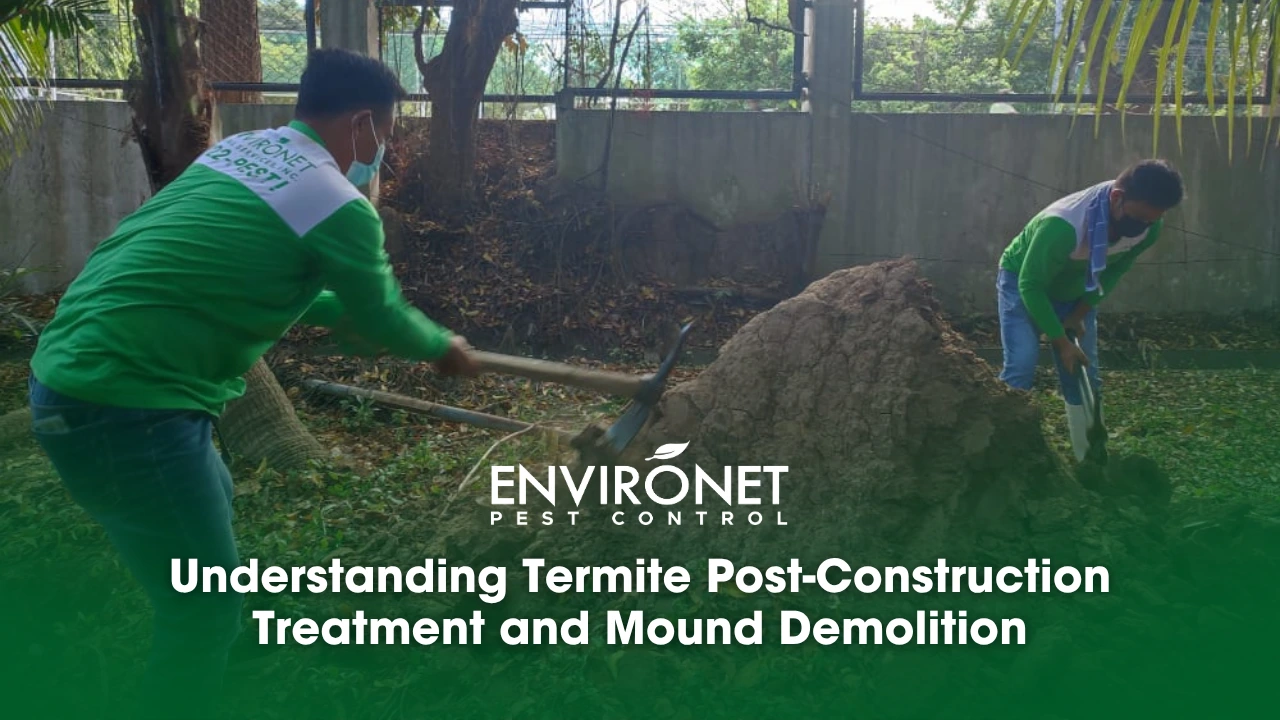
Understanding Termite Post-Construction Treatment and Mound Demolition
Termite infestations can continue developing long after a property has been completed. When termite activity is discovered in an existing structure, professional post-construction termite treatment becomes an important step in managing the infestation and reducing further damage.
In some cases, termite mounds may also appear around the property. While mound demolition can help reduce visible termite activity, it is not enough to fully address the infestation without proper inspection and treatment.
Signs of an Active Termite Infestation
Termites often remain hidden, but several warning signs may indicate active infestation:
- Mud tubes along walls or foundations
- Hollow-sounding wood
- Swarming termites or discarded wings
- Bubbling paint or warped surfaces
- Damaged wooden structures
- Tight-fitting doors and windows
Ignoring these signs can allow termite colonies to continue spreading throughout the property.
What Post-Construction Termite Treatment Involves
Post-construction termite treatment is designed to manage termite activity in existing structures.
Depending on the property condition and infestation level, treatment methods may include:
- Soil treatment around the structure
- Drilling and injection treatment
- Wood treatment applications
- Perimeter protection procedures
- Monitoring and inspection programs
Professional treatment aims to target termite activity while helping protect vulnerable areas from further infestation.
Why Termite Mounds Should Not Be Ignored
Termite mounds are visible indicators of active termite colonies nearby. These structures serve as protective environments for termites and may contain large populations capable of expanding to nearby buildings and wooden structures.
Some property owners attempt to destroy mounds on their own, assuming the problem is resolved once the mound is removed. However, visible mound removal alone may not eliminate the entire termite colony.
How Mound Demolition Helps Reduce Colony Activity
Professional termite mound demolition can help disrupt termite activity and reduce portions of the colony population.
The process may involve:
- Breaking open the mound structure
- Applying appropriate treatment methods
- Assessing surrounding infestation risks
- Monitoring nearby termite activity
Mound demolition is often most effective when combined with a broader termite management program.
Importance of Locating the Source Colony
Termites may establish multiple hidden pathways underground or within structural voids. Even after visible mounds are destroyed, termites can continue surviving in satellite colonies or underground nesting areas.
Professional inspection helps determine:
- The extent of infestation
- Entry points into the property
- Moisture conditions attracting termites
- Areas requiring treatment and monitoring
Identifying the source colony is important for reducing recurring termite activity.
Why Professional Treatment Is Necessary
Termite infestations can be difficult to manage without proper knowledge, equipment, and treatment methods. Professional termite control services help provide:
- Accurate infestation assessment
- Proper treatment application
- Long-term monitoring strategies
- Reduced risk of recurring infestations
Attempting temporary or incomplete solutions may allow termites to continue damaging the property unnoticed.
Protect Your Property From Further Damage
Post-construction termite treatment and mound demolition play important roles in managing active termite infestations. However, long-term protection requires proper inspection, treatment, and ongoing monitoring.
If you notice signs of termite activity or termite mounds around your property, professional assistance is highly recommended.
Protect your property from further termite damage through professional inspection and treatment. Book a FREE termite inspection today!