
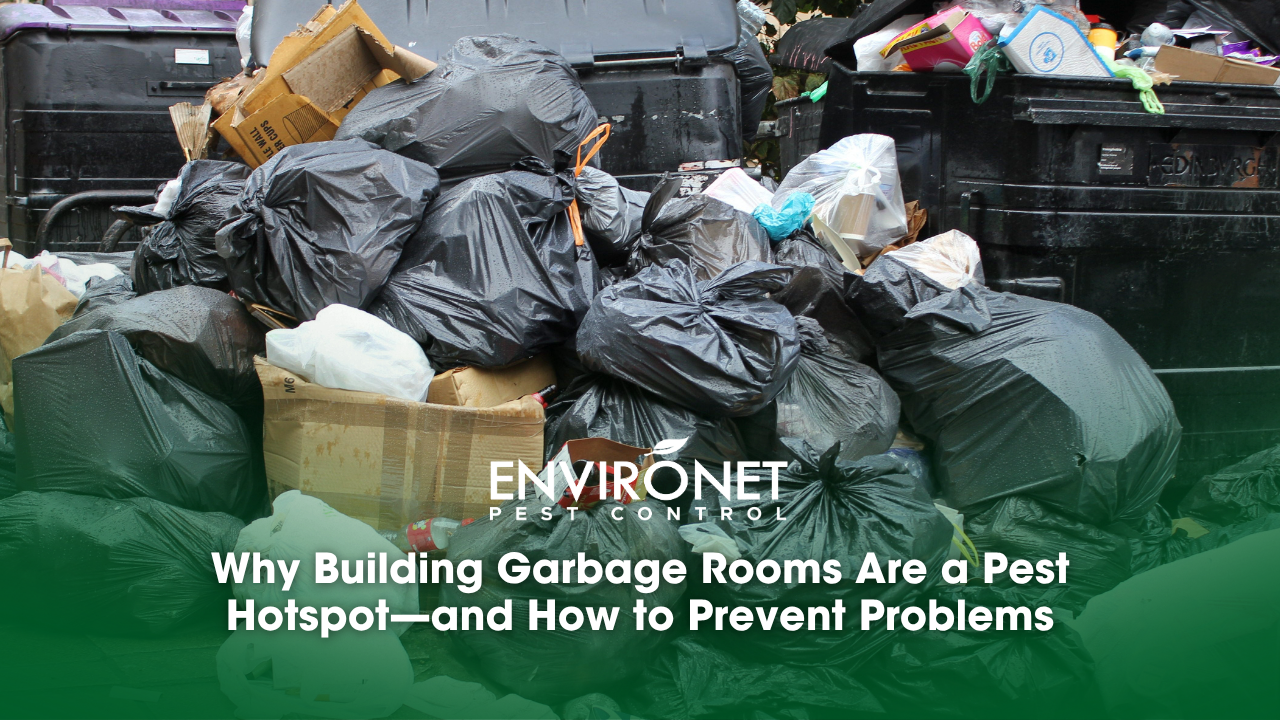
Why Building Garbage Rooms Are a Pest Hotspot—and How to Prevent Problems
Last updated on August 12th, 2026 at 10:25 am
Garbage rooms are an essential part of every condominium, commercial building, and office building. They provide a designated area for collecting and temporarily storing waste before disposal.
However, garbage rooms can also become one of the most attractive areas for pests.
Food residues, moisture, overflowing bins, and improperly stored waste can create ideal conditions for cockroaches, flies, rats, and other pests. If the problem is not addressed early, pests may eventually move beyond the garbage room and into common areas, offices, kitchens, and tenant spaces.
Why Garbage Rooms Attract Pests
Garbage rooms provide three things pests need to survive: food, water, and shelter.
Even when garbage is regularly collected, small amounts of food waste can remain inside bins, on floors, or in hard-to-reach areas. Leaking garbage bags and wet surfaces can also provide moisture.
Common conditions that attract pests include:
- Overflowing or uncovered garbage bins
- Food residue and spills
- Wet floors and leaking containers
- Poor ventilation
- Cracks and gaps around walls, doors, and pipes
- Infrequent deep cleaning
- Improper waste segregation and storage
- Accumulated debris behind or underneath bins
Common Pests Found in Garbage Rooms
Cockroaches
Cockroaches are particularly attracted to areas with food residue and moisture. They can hide in cracks, drains, wall voids, and around plumbing fixtures.
A cockroach problem in the garbage room can become more difficult to control if pests begin spreading to nearby areas.
Rats and Mice
Rats and mice are attracted to garbage rooms because of the availability of food and shelter. They can enter through surprisingly small openings and may move through utility spaces, ceilings, wall voids, and service areas.
Signs may include droppings, gnaw marks, damaged packaging, grease marks, and unusual noises.
Flies
Flies can quickly become a nuisance when organic waste is exposed. They may also reproduce in decomposing organic matter, particularly when waste containers are not properly cleaned.
Ants
Food residues and sugary waste can attract ants. Once they establish a food source, they may begin traveling into nearby common areas and tenant spaces.
Why Garbage Room Pest Problems Should Not Be Ignored
A pest issue that starts in a garbage room does not necessarily stay there.
Pests can move through:
- Hallways and service corridors
- Utility rooms
- Kitchens and pantry areas
- Loading and receiving areas
- Tenant offices
- Retail spaces
- Residential units
For property managers, this can lead to increased tenant complaints and a more complicated pest management situation.
The goal should therefore be to prevent garbage rooms from becoming pest-conducive environments in the first place.
How Property Managers Can Reduce Pest Risks
Good sanitation and facility maintenance are the first line of defense.
Property management teams should:
- Keep garbage containers covered.
-Use properly fitting lids whenever possible. - Remove waste regularly.
-Avoid allowing garbage to accumulate beyond the capacity of the designated containers. - Clean spills immediately.
-Food residue and liquid waste should not be left on floors or surfaces. - Clean and disinfect garbage bins regularly.
-Residue inside containers can continue attracting pests even after garbage has been removed. - Keep floors dry.
-Address leaks and drainage problems promptly. - Inspect entry points.
-Check doors, drains, pipes, wall penetrations, and other potential pest entry points. - Monitor pest activity.
-Look for droppings, live or dead insects, gnaw marks, unusual odors, and other signs. - Schedule professional pest management.
-Regular inspection and preventive treatments can help identify pest risks before they develop into larger problems.
Prevention Is Better Than Waiting for Complaints
Garbage rooms should be included in the property’s overall pest management plan—not treated as an isolated area.
For condominiums and commercial buildings, regular inspections can help property managers identify sanitation issues, structural entry points, and early signs of pest activity.
A proactive approach can also make pest management more predictable and easier to coordinate with building operations.
Keep Your Building’s Garbage Room Under Control
A clean garbage room is an important part of maintaining a well-managed property. But sanitation alone may not be enough if pests have already established harborage or access points.
Property managers should combine proper waste management, regular inspection, facility maintenance, and professional pest management to reduce pest risks throughout the building.
When garbage rooms are properly monitored and managed, property teams can address potential pest issues before they spread to areas occupied by tenants, employees, residents, or customers. Book now!