
Why Pests Become a Bigger Concern During Heavy Rains and Flooding
Last updated on August 20th, 2026 at 12:55 pm
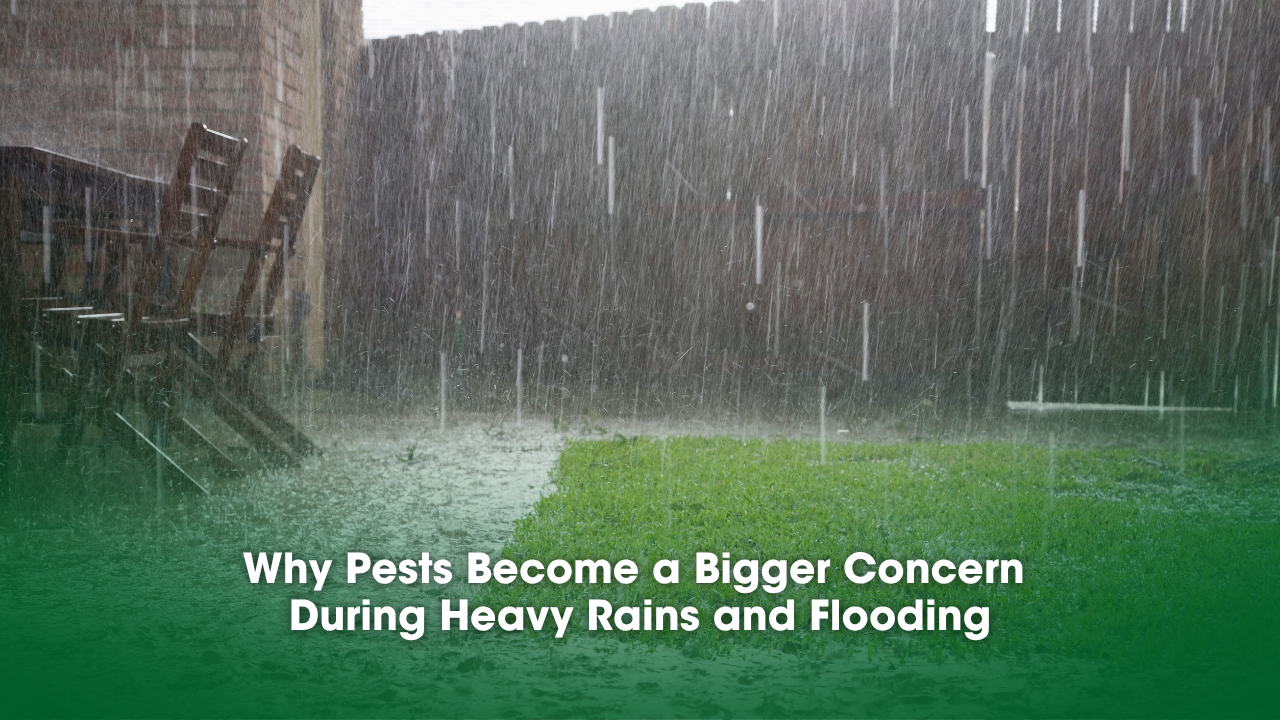
Heavy rains can change the environment around a property.
Flooded outdoor areas, saturated soil, overflowing drains, and increased moisture may affect the normal habitats and movement of different pests. Some pests may be displaced from their usual nesting or hiding places, while others may benefit from wet conditions or increased access to water.
This does not mean that rain automatically causes a pest infestation. However, changing environmental conditions can create opportunities for pests to move, survive, or enter properties.
Understanding these changes can help property owners take a more preventive approach.
Flooding Can Displace Pests
Rodents and other pests living in outdoor environments may be forced to move when their usual hiding places become flooded.
As ground-level shelters, burrows, storage areas, and outdoor spaces become saturated, pests may search for drier areas with access to food and shelter.
Properties can become attractive if they offer:
- Dry indoor spaces
- Accessible food
- Poorly managed waste
- Open entry points
- Cluttered storage areas
- Gaps around doors, pipes, and walls
This is one reason why property inspections are valuable after severe weather.
Moisture Can Create Favorable Conditions
Excessive moisture can affect pest activity in different ways.
Cockroaches, ants, and other pests may be associated with areas where moisture, food, and shelter are available. Leaks, clogged drains, damp storage rooms, and poorly maintained outdoor areas can create conditions that make pest management more challenging.
After prolonged rainfall, inspect your property for:
- Leaking pipes
- Water-damaged areas
- Damp walls
- Blocked drains
- Overflowing gutters
- Water accumulation near the building
- Excessive vegetation touching structures
Addressing moisture problems is an important part of integrated pest management.
Standing Water Creates a Different Type of Risk
Standing water is particularly important when discussing mosquitoes.
Not every body of water automatically becomes a mosquito breeding site, and different mosquito species have different environmental preferences. However, small containers and areas where water remains undisturbed can provide suitable breeding opportunities for some mosquitoes.
Regular inspections can help identify and remove unnecessary water accumulation.
Health authorities encourage communities to manage potential mosquito breeding sites through actions such as emptying, cleaning, covering, or properly disposing of containers that can collect water.
Outdoor Areas Are Part of Pest Prevention
Pest management should not begin only after pests enter a building.
The exterior of a property plays an important role in prevention.
Outdoor inspections can identify:
- Pest harborage areas
- Rodent access points
- Water accumulation
- Vegetation touching structures
- Waste management concerns
- Open gaps and cracks
- Signs of pest activity
Perimeter treatments, when appropriate, may also form part of a professional pest management strategy.
The goal is not simply to treat pests wherever they are seen. Effective pest management should also consider where pests are coming from, what conditions support their activity, and how access to the property can be reduced.
Prevention Is More Effective When It Starts Early
Waiting until pest activity becomes obvious can make a problem more difficult to manage.
During prolonged rainy conditions, property managers and homeowners can take proactive steps:
- Inspect outdoor areas regularly.
- Keep drains and gutters clear.
- Remove unnecessary standing water.
- Manage garbage properly.
- Reduce clutter.
- Seal possible pest entry points.
- Monitor for signs of pest activity.
- Consider professional inspection and treatment when needed.
Protect Your Property—Inside and Out
Heavy rain and flooding can change the environment around your property.
A preventive pest management program should consider both indoor and outdoor conditions, especially during seasons when moisture and environmental changes may affect pest activity.
By combining sanitation, exclusion, environmental management, monitoring, and appropriate professional treatment, property owners can build a stronger defense against pest problems.