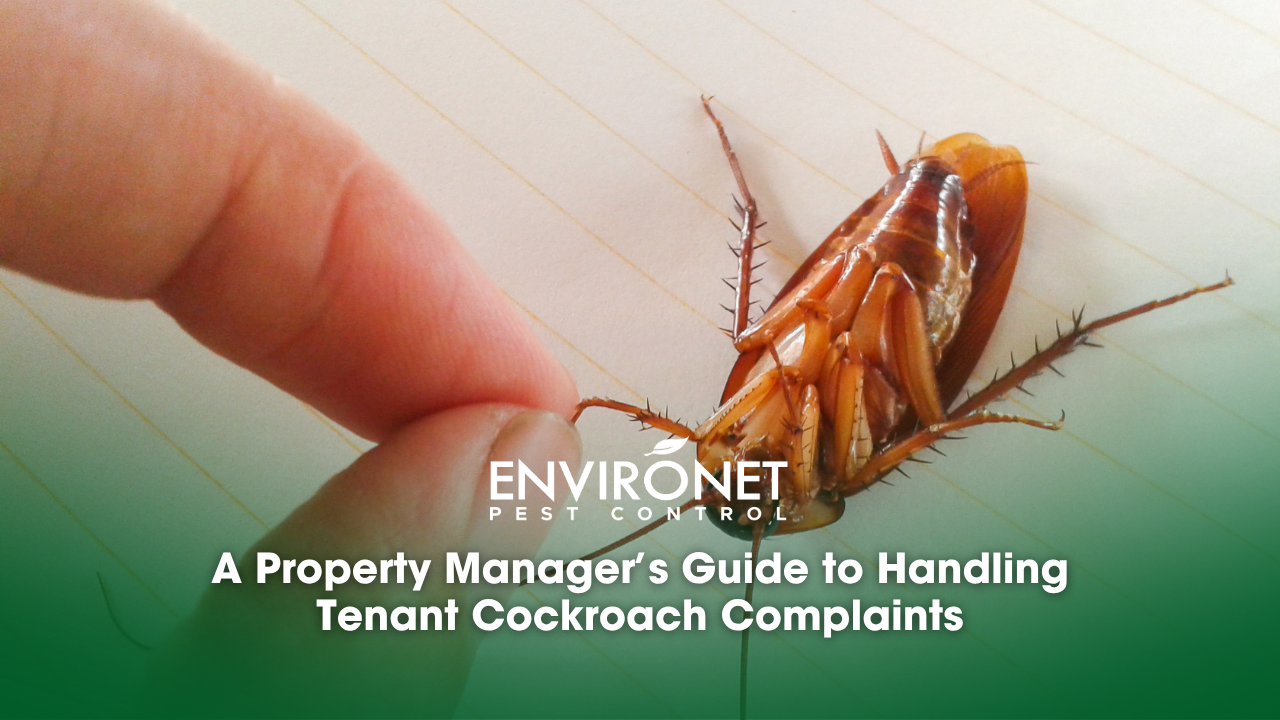
A Property Manager’s Guide to Handling Tenant Cockroach Complaints
Last updated on August 14th, 2026 at 03:54 pm
A tenant reporting a cockroach may seem like a minor maintenance concern, but for property managers, it should be treated as a pest management alert.
One reported cockroach does not automatically mean the entire building has an infestation. However, it is an opportunity to investigate the situation before the problem potentially becomes more widespread.
Whether you manage a condominium, office building, or other commercial property, having a consistent response procedure can make cockroach complaints easier to handle while helping your team identify recurring pest risks.
1. Take the Report Seriously
The first step is to acknowledge the tenant’s concern and gather the necessary information.
Ask basic questions such as:
- Where was the cockroach seen?
- When was it observed?
- Was it alive or dead?
- How many were seen?
- What did it look like?
- Has the tenant noticed cockroach droppings, egg cases, or unusual odors?
- Have cockroaches been seen more than once?
If possible, request a photo or video.
These details can help your team determine whether an inspection is necessary and how quickly it should be scheduled.
2. Do Not Assume the Problem Is Limited to One Unit
Cockroaches can move through plumbing spaces, wall voids, utility areas, corridors, and other connected parts of a building.
In condominiums and multi-tenant commercial buildings, pest activity may also be influenced by neighboring units or common areas.
For this reason, property managers should consider the location and building layout, rather than automatically treating only the area where the cockroach was reported.
A complaint from one tenant can be a reason to investigate nearby areas for possible signs of activity.
3. Arrange an Inspection
An inspection should help determine:
- What type of pest is involved
- Where activity is concentrated
- Possible food and water sources
- Potential hiding or breeding areas
- Possible entry points
- Whether nearby areas show signs of activity
The inspection may also identify sanitation or maintenance conditions that could be contributing to the problem.
When You Need Professional Assistance
Not every cockroach sighting requires the same response. A professional inspection can help determine whether the activity appears isolated or may be part of a larger pest management concern.
Environet Pest Control works with property managers, condominiums, office buildings, and other commercial properties to inspect and manage pest concerns.
Our team can help identify areas of activity, contributing conditions, and appropriate pest management measures based on the property’s needs.
If your property is experiencing recurring cockroach complaints or you’re unsure where the activity is coming from, a professional assessment can help your team determine the next appropriate step.
4. Check Common Pest Hotspots
Depending on the property, inspection areas may include:
- Kitchens and pantries
- Garbage rooms
- Utility rooms
- Restrooms
- Drainage areas
- Food service areas
- Storage rooms
- Pipe and plumbing penetrations
- Electrical and equipment areas
- Adjacent units or offices
This is particularly important in office buildings and commercial properties where food preparation, pantry areas, and shared facilities may create additional pest risks.
For condominiums, common areas and adjacent units may also need to be considered depending on the location and circumstances of the report.
5. Communicate Clearly With the Tenant
Tenants should understand what will happen next.
Explain the inspection or treatment process, any preparation requirements, and what they should do if they observe additional activity.
Avoid making assumptions such as “the tenant caused the problem.”
Cockroach activity can result from multiple factors, including building conditions, neighboring spaces, sanitation, moisture, and pest entry points.
Professional communication helps maintain tenant confidence while allowing the property management team to address the problem objectively.
6. Address Contributing Conditions
Professional pest control is only one part of effective cockroach management.
Property teams should also check for conditions such as:
- Food left exposed
- Uncleaned spills
- Leaking plumbing
- Standing water
- Accumulated clutter
- Gaps around pipes and walls
- Damaged doors or seals
- Poor garbage handling
Correcting these conditions can help reduce opportunities for cockroaches to survive and spread.
This is why pest management should involve coordination between property management, maintenance, housekeeping, tenants, and the pest control provider when appropriate.
7. Monitor After Treatment
A treatment should not necessarily be considered the end of the process.
Property managers should monitor the affected area and document subsequent reports.
If activity continues, the pest control provider may need to reassess the situation and determine whether additional treatment, monitoring, or corrective measures are necessary.
The goal should be to understand why the activity is continuing, rather than simply responding to each new sighting individually.
8. Keep a Record of Pest Complaints
A simple pest complaint log can become a valuable property management tool.
Record:
- Date of complaint
- Location
- Tenant or area reporting the issue
- Type of pest
- Inspection date
- Treatment performed
- Follow-up date
- Results of monitoring
Over time, this information can reveal recurring hotspots and help property managers improve their preventive pest management schedule.
For example, if multiple complaints repeatedly come from areas near a garbage room, pantry, or plumbing area, the records may point to a location that requires closer inspection or additional corrective measures.