
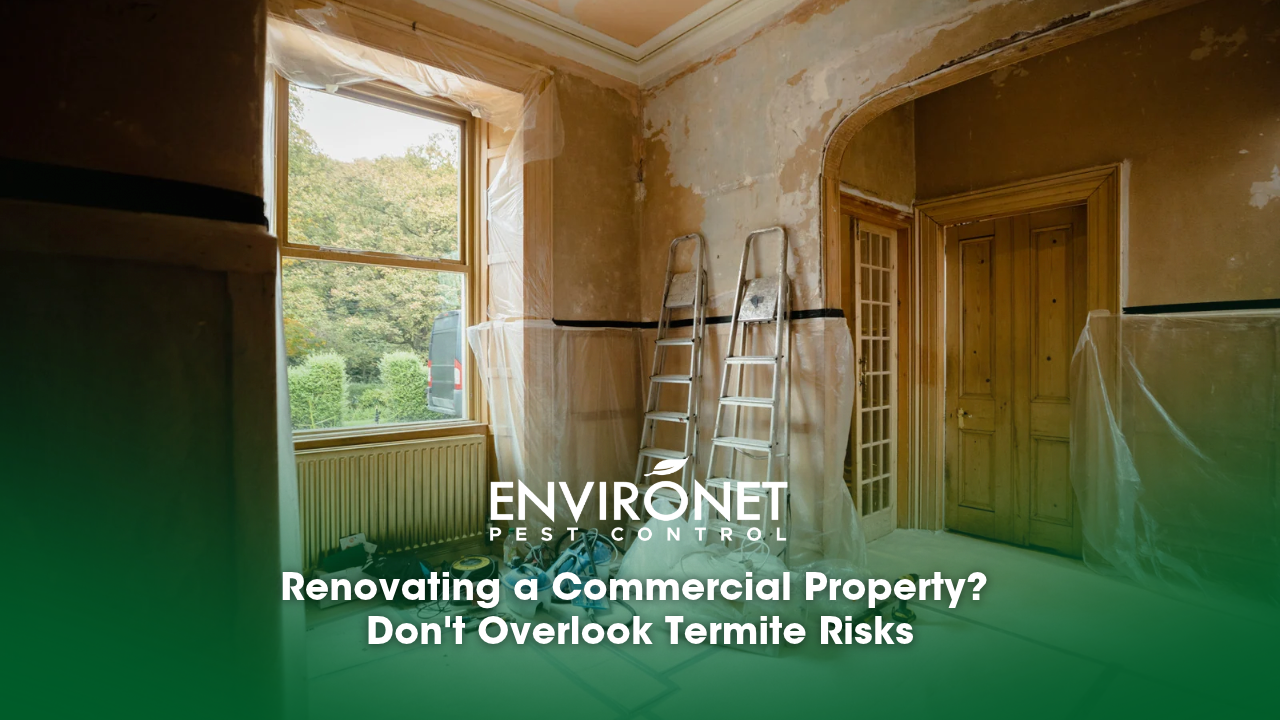
Renovating a Commercial Property? Don’t Overlook Termite Risks
Renovating a commercial property is an opportunity to improve functionality, modernize interiors, and prepare a business for future operations.
Whether you’re upgrading an office, renovating a restaurant, or preparing a retail space for a new tenant, renovation projects usually involve careful planning.
Contractors assess materials, property managers coordinate schedules, and business owners monitor costs.
But one concern can be overlooked during these improvements: termite activity.
Commercial renovations can uncover existing termite damage or create opportunities to identify vulnerabilities before new materials are installed.
Understanding these risks can help businesses avoid preventable problems during and after renovation.
Why Termite Risks Matter During Renovation
Termites can damage wood and other cellulose-containing materials in commercial properties.
Depending on the building’s construction and the termite species present, activity may occur in wooden partitions, doorframes, cabinets, concealed framing, and other vulnerable locations.
In some cases, termite damage remains hidden behind finished surfaces.
When renovation work begins and these materials are exposed, workers may discover damage that was not previously visible.
Identifying potential termite concerns before major improvements can help property owners plan appropriate inspections and corrective work.
1. Renovation Can Expose Previously Hidden Damage
Commercial interiors often contain built-in fixtures, wall panels, and enclosed spaces.
These features may conceal sections of wood that are difficult to inspect during regular building use.
When old cabinetry, decorative panels, or partitions are removed, termite-related damage may become visible.
Possible findings include hollowed wood, internal galleries, mud tubes, or live termite activity.
However, not all damaged wood is caused by termites. Moisture, decay, and other factors may produce similar-looking conditions.
Professional assessment helps determine whether termite activity is present and what action may be necessary.
2. New Wooden Materials May Become Vulnerable
Commercial renovations may introduce new wooden materials into a property.
These can include:
-
Built-in cabinets and counters
-
Wooden partitions and wall panels
-
Decorative wall features
-
Doorframes and interior fittings
-
Storage shelves and fixtures
Installing new materials without addressing existing termite activity or identified vulnerabilities may expose those materials to future damage.
For this reason, property owners should consider whether termite-related concerns need attention before completing major installations.
Professional termite management recommendations should reflect the property’s actual conditions and renovation plans.
3. Changes Around Foundations May Affect Existing Protection
Some commercial renovation projects involve excavation, landscaping, or modifications around the building perimeter.
These activities can disturb soil and potentially affect previously treated areas.
For example, removing soil near a foundation, creating utility trenches, or modifying external drainage may change conditions around the building.
If the property previously received soil treatment, the owner should consult the service provider before significant ground disturbance.
An assessment may be necessary to determine whether protective measures have been affected or whether additional treatment is appropriate.
4. Moisture Problems Should Be Addressed During Renovation
Moisture management is an important part of maintaining commercial buildings.
Leaking pipes, poor drainage, persistent dampness, and certain construction defects can create conditions favorable to subterranean termite activity.
Renovation presents an opportunity to identify and correct these issues.
For example, property owners may discover previously concealed plumbing leaks or drainage problems while replacing fixtures and wall materials.
Correcting such conditions can support broader termite prevention efforts.
However, moisture management alone does not eliminate an established termite infestation.
5. Coordinate Termite Assessment With Your Contractor
Effective renovation planning often involves several professionals.
These may include architects, engineers, contractors, building administrators, and pest management specialists.
When termite activity is suspected, coordinating an assessment before affected areas are concealed can be helpful.
The termite management provider can identify visible evidence, assess accessible conditions, and recommend an appropriate response.
The contractor can then coordinate any repairs or modifications required before finishing the renovation.
If significant structural damage is discovered, a qualified structural professional should assess its implications.
This coordination can help prevent unnecessary rework.
6. Different Renovation Projects May Require Different Approaches
Not all commercial renovation projects need the same termite treatment.
For example, an office undergoing cosmetic improvements may require a different assessment from a property undergoing major structural modifications.
Similarly, an existing building with confirmed termite activity may need a different solution from a new extension where preventive measures are being planned.
Environet offers several Termite Prevention & Control services, including Post-Construction Chemical Treatment, Termite Baiting Systems, Pre-Construction Soil Treatment, and Termite Reticulation Systems.
The appropriate option depends on the property’s construction stage, treatment accessibility, infestation conditions, and other site-specific factors.
A professional inspection helps establish which approach is suitable.
7. Include Termite Management in the Renovation Budget
Renovation budgets usually account for materials, labor, fixtures, electrical work, plumbing, and finishing.
Termite-related inspection and treatment should also be considered when the property has identified risks.
The purpose is not to add unnecessary services to every project.
Rather, it is to identify possible termite concerns early enough to make informed decisions.
Addressing confirmed termite problems during renovation may be more practical than discovering them after new finishes and fixtures have been installed.
Prepare Your Commercial Property for Long-Term Use
Renovation is about more than improving how a property looks.
It is also an opportunity to assess its condition and address vulnerabilities that may affect future maintenance.
By considering termite risks during renovation planning, commercial property owners can make better decisions about inspections, repairs, treatment, and long-term maintenance.
Planning to renovate or improve your commercial property?
Let Environet help you assess possible termite concerns and determine appropriate prevention or treatment options.
Environet offers FREE initial termite consultations and inspections, subject to scheduling and service coverage.