
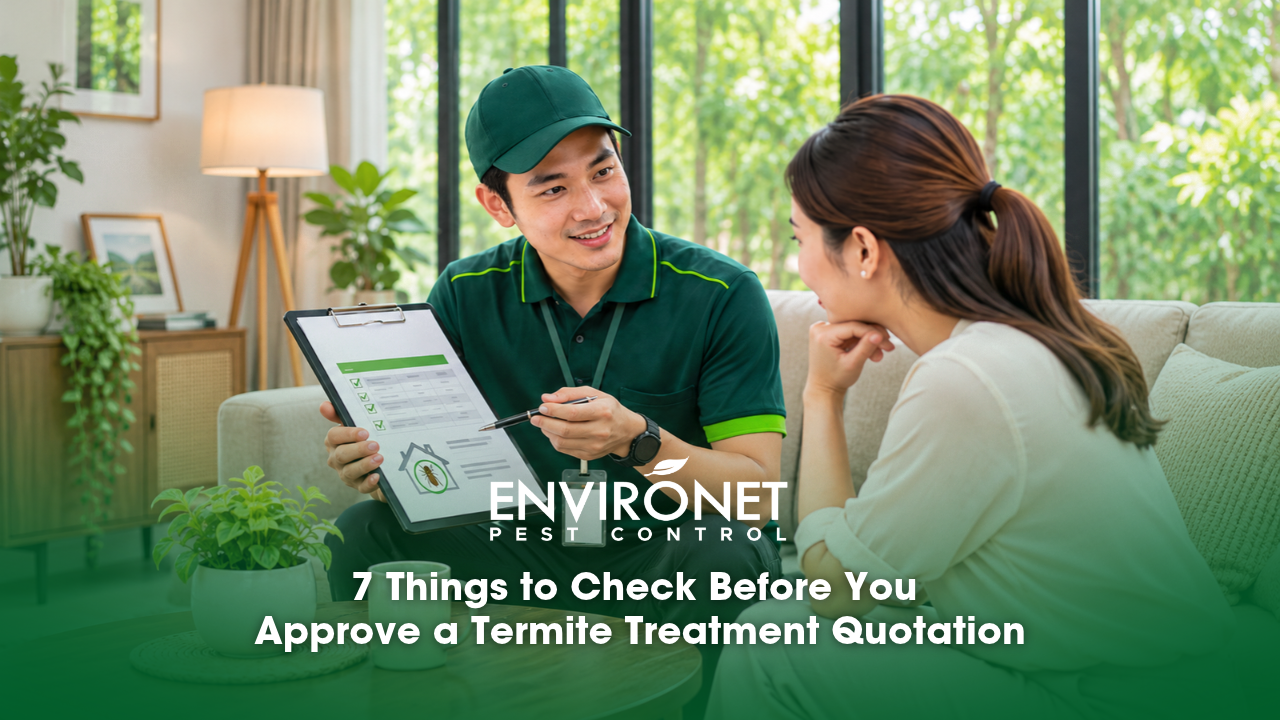
7 Things to Check Before You Approve a Termite Treatment Quotation
Before approving a termite treatment quotation, it’s important to understand exactly what you’re paying for.
Not all termite treatments are the same. The recommended method, service coverage, pricing, and follow-up requirements can vary depending on your property’s needs.
So how do you know if a termite treatment quotation is right for you?
Here are 7 important things to check before giving your approval, so you can make an informed decision and protect your property with confidence.
1. Understand the Recommended Treatment Method
The first thing to review is the type of termite treatment being recommended.
Different termite management methods address different situations.
For example, Environet offers several solutions, including Pre-Construction Soil Treatment, Post-Construction Chemical Treatment, Termite Baiting Systems, Termite Reticulation Systems, and Termite Mound Demolition.
Each approach has a different application and purpose.
Before approving your quotation, ask why a particular method has been recommended for your property.
Understanding the treatment’s purpose helps you make a more informed decision.
2. Check the Treatment Coverage
A termite treatment quotation should clearly identify the areas included in the proposed service.
This may involve:
-
Building perimeters and foundations
-
Identified termite activity areas
-
Designated soil treatment locations
-
Wooden fixtures or accessible components
-
Specific treatment or monitoring stations
For commercial properties, confirming the coverage is especially important because large establishments may contain multiple buildings, rooms, or areas requiring different approaches.
Remember: The size of the property and the actual treatment coverage are not always the same.
Clarifying the scope helps avoid misunderstandings about which areas will receive treatment.
3. Review the Service Inclusions
Not all termite treatment quotations include exactly the same services.
Depending on the treatment method, a quotation may include initial application, installation of treatment components, scheduled monitoring, or follow-up inspections.
Ask the service provider to explain which activities are included and whether additional services may be necessary later.
For example, termite baiting systems generally involve ongoing station inspections and monitoring, while chemical treatment services follow their own approved procedures.
Understanding these differences helps property owners plan ahead.
4. Understand the Pricing and Contract Terms
Price is an important factor, but it shouldn’t be the only basis for choosing termite treatment.
The quotation amount may depend on the property layout, treatment coverage, infestation conditions, recommended method, and required materials or labor.
Before confirming, check whether the quotation clearly identifies the total price, applicable taxes, payment terms, and any separately chargeable services.
For recurring or multi-stage services, clarify how billing and service schedules work.
A lower quotation is not necessarily the better choice if it excludes essential treatment or monitoring activities.
5. Ask About Treatment Preparation
Some termite management services require property preparation or coordination before treatment begins.
For example, certain areas may need to be accessible for inspection or application.
For occupied commercial properties, treatment scheduling may also need to consider customers, employees, equipment, and ongoing operations.
Ask about any preparation requirements, temporary access restrictions, and the instructions that should be followed before and after treatment.
These requirements should be specific to the treatment method and products used.
6. Clarify the Warranty and Follow-Up Arrangements
Termite treatment may involve follow-up inspections, monitoring, or warranty provisions.
The applicable terms can vary depending on the service.
When reviewing a quotation, ask what warranty applies, how long it lasts, which conditions are covered, and what responsibilities the property owner must fulfill.
It’s also helpful to clarify how suspected termite activity should be reported after treatment.
A warranty should not be interpreted as a guarantee that termites can never return.
7. Confirm Scheduling and Communication
Finally, understand what happens after you approve the quotation.
Ask how the treatment schedule will be coordinated, who will communicate the preparation instructions, and how service concerns will be addressed.
Clear communication helps avoid unnecessary scheduling problems and allows property owners to prepare properly.
How Environet Handles Termite Quotations
At Environet Pest Control, the process begins with understanding the property’s termite-related concerns.
Following the initial consultation and on-site inspection, our technician submits the inspection findings to the Operations Officer.
Based on the assessment, the team prepares an appropriate service recommendation and sends the quotation to the client through email.
Once the quotation is approved, service scheduling and preparation can be coordinated.
This process helps clients understand the recommended treatment before confirming their booking.
Make an Informed Decision Before Booking
A professional termite treatment quotation is more than a price estimate.
It should help you understand the proposed treatment, applicable coverage, service inclusions, and next steps.
Taking time to review these details can help you choose a service that matches your property’s needs.
Planning to protect your home or commercial property against termites?
Environet offers FREE initial termite consultations and inspections, subject to scheduling and service coverage.