
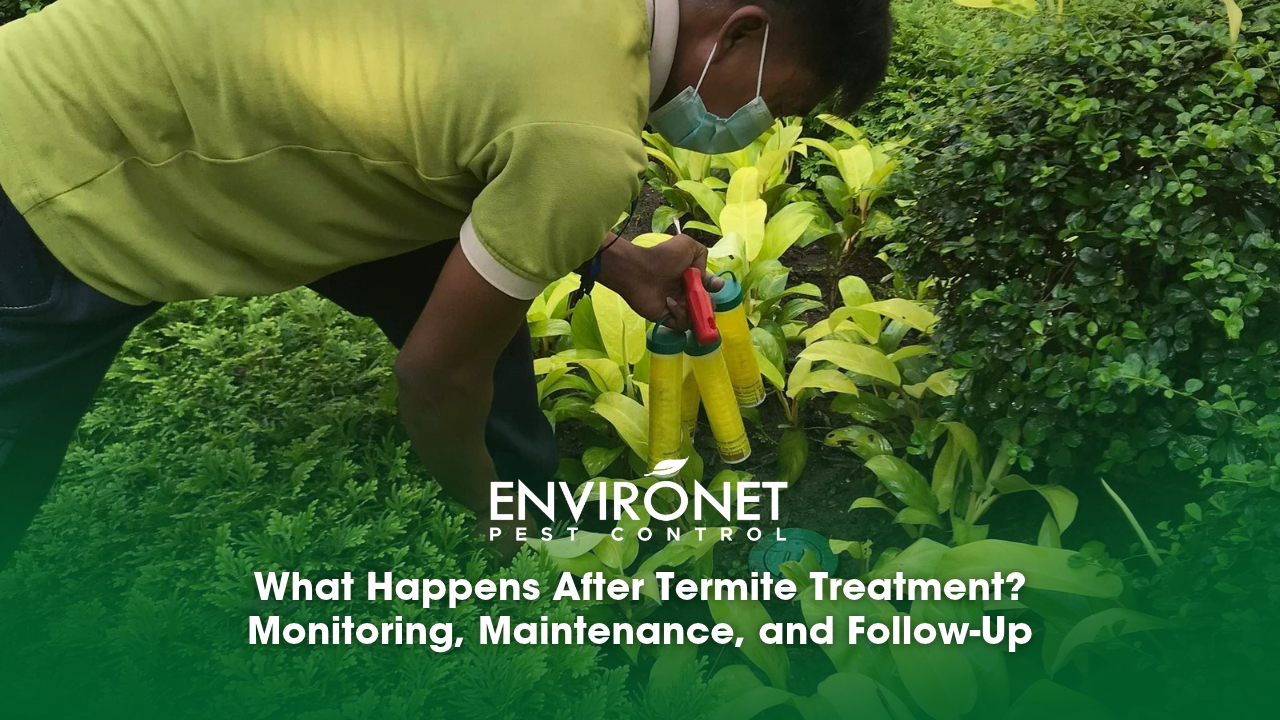
What Happens After Termite Treatment? Monitoring, Maintenance, and Follow-Up
Last updated on November 24th, 2026 at 09:35 am
ou’ve scheduled a professional termite treatment, the technicians have completed the service, and your property has received the recommended application.
But what happens next?
Many property owners assume that termite protection ends as soon as the treatment is completed.
In reality, termite management may involve continued monitoring, follow-up inspections, and property maintenance, depending on the treatment method and the conditions of the property.
Understanding what happens after treatment can help you manage expectations and take appropriate steps toward long-term property protection.
1. Understand That Treatment Results May Take Time
Not all termite treatments work in the same way or produce results within the same timeframe.
Some chemical treatment approaches are intended to manage termite activity in targeted locations, while baiting systems use a different process involving termite feeding and the transfer of bait material within susceptible colonies.
As a result, the period required to observe changes in termite activity can vary.
For example, termite baiting systems generally require continued monitoring to evaluate bait consumption and colony activity.
Property owners should follow the treatment provider’s recommendations rather than assume that the absence of visible termites immediately confirms complete control.
2. Follow Post-Treatment Instructions
After termite treatment, technicians may provide instructions about when treated areas can be accessed, what activities should be avoided, and whether any surfaces or soil areas require special precautions.
These instructions depend on the treatment method, product label, and site conditions.
For example, recently treated soil may need to remain undisturbed to preserve the intended treatment coverage.
Some applications may also require temporary restrictions on access to treated areas.
Always follow the written instructions issued for your specific service, including any applicable re-entry period. Do not assume that every termite treatment has the same safety requirements.
3. Continue Checking for Possible Termite Activity
Even after treatment, property owners should remain observant.
Watch for possible evidence such as mud tubes, live termite activity, newly damaged wood, or other unusual changes in previously affected areas.
However, not every sign means that a treatment has failed.
For example, old termite damage may remain visible even after activity has been managed, while certain marks or residues may require professional assessment to determine whether they are new.
If you notice suspicious activity, document the location and contact your termite treatment provider.
Avoid disturbing bait stations, treatment installations, or suspected termite activity before receiving instructions, because doing so may interfere with monitoring.
4. Understand the Importance of Follow-Up Inspections
Depending on the service, follow-up inspections may be necessary to evaluate treatment performance.
For termite baiting systems, monitoring is a central part of the treatment approach.
Technicians may check stations, review bait consumption, inspect for continuing activity, and determine whether maintenance or adjustments are necessary.
Other termite treatment methods may also involve follow-up visits according to the service agreement or identified concerns.
The frequency of these inspections depends on the treatment type, property conditions, and agreed scope.
Property owners should review their quotation and warranty documents to understand which follow-up services are included.
5. Maintain Property Conditions That Discourage Termite Activity
Professional treatment is important, but everyday property maintenance also contributes to managing termite risks.
Certain environmental conditions may make a property more favorable for subterranean termites.
Consider these maintenance practices:
-
Address leaking pipes, drainage problems, and persistent moisture.
-
Avoid unnecessary wood-to-soil contact around the building.
-
Keep scrap timber, cardboard, and other cellulose materials properly stored.
-
Maintain access to areas identified for termite monitoring.
-
Regularly check vulnerable wooden fixtures for unusual changes.
These measures do not replace professional termite management, but they can help reduce conditions that encourage termite activity.
6. Be Careful During Renovations and Landscaping
Changes to a property may affect existing termite protection measures.
For example, excavation, soil movement, landscaping work, or certain construction activities may disturb previously treated areas.
Modifications around foundations and building perimeters can also change access conditions for termites.
Before undertaking significant renovations or excavation near treated locations, consult your termite treatment provider.
Depending on the work performed, an assessment or additional treatment may be appropriate.
This is particularly important for commercial properties undergoing regular renovations or site improvements.
7. Keep Your Treatment and Warranty Records
Termite management records can be useful for property maintenance planning.
Keep copies of your service quotation, treatment report, warranty certificate, follow-up schedule, and other relevant documents.
For commercial establishments, these records can also support internal maintenance coordination.
Useful information includes the treatment date, type of service performed, areas covered, and subsequent observations.
If suspected termite activity appears later, these documents can help the service provider understand the property’s treatment history.
Does Termite Treatment Guarantee Permanent Protection?
No termite treatment should be presented as a permanent guarantee against all future termite activity.
Treatment effectiveness can depend on factors including the termite species, application method, environmental conditions, and changes made to the property.
Even when an initial infestation is successfully managed, new activity may become possible under different conditions.
This is why appropriate monitoring and preventive maintenance remain valuable parts of termite management.
Long-Term Protection Requires More Than One Service Visit
Professional termite treatment can be an important step in protecting your property.
However, managing termite risks also involves understanding your treatment, following aftercare instructions, maintaining your property, and arranging follow-up services when appropriate.
At Environet Pest Control, we offer Termite Prevention & Control solutions based on the property’s needs, including chemical treatments, baiting systems, and other specialized services.
Want to understand which termite treatment is appropriate for your property? Book now for a FREE consultation.