
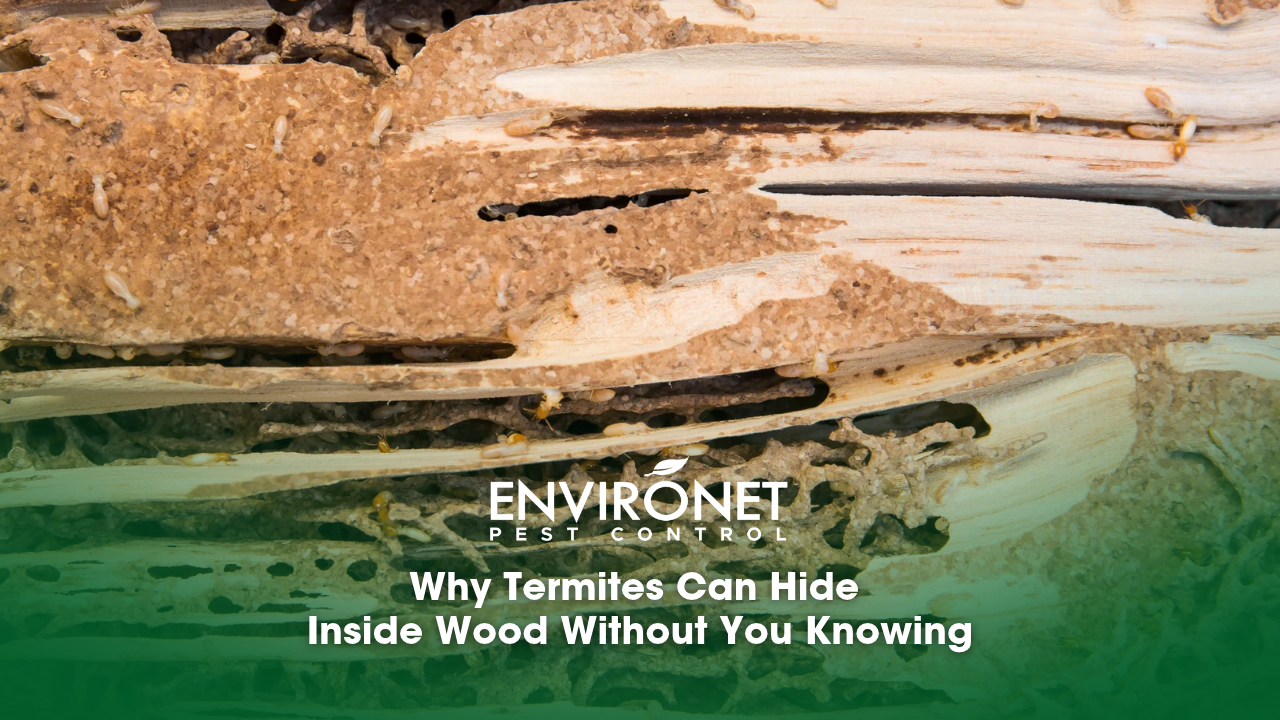
Why Termites Can Hide Inside Wood Without You Knowing
Last updated on November 13th, 2026 at 10:50 am
Have you ever looked at a wooden cabinet, doorframe, or piece of furniture and assumed it was in good condition simply because the outside looked normal?
Unfortunately, appearances can be deceiving.
Termites can remain hidden inside wooden materials while feeding and causing damage from within. In some cases, a wooden surface may appear relatively intact even though the interior has already been affected by termite activity.
This is one reason termites are often described as silent destroyers.
Understanding how termites hide inside wood can help property owners recognize why professional inspections and preventive termite management are important.
How Do Termites Get Inside Wood?
Termites feed primarily on cellulose, an organic material found in wood and other plant-based materials.
Depending on the termite species, they may reach wooden materials through soil, concealed pathways, cracks, joints, or direct access to suitable wood.
Subterranean termites, for example, often travel through protected mud tubes that help them move between their colony and food sources.
Once termites reach a suitable wooden material, they can begin feeding internally.
As feeding continues, termites may create galleries or hollow spaces inside the wood, leaving damage that is not immediately obvious from the outside.
Why Is Termite Damage Difficult to Notice?
One of the biggest challenges with termite activity is that it doesn’t always begin with obvious surface damage.
Termites may continue feeding in concealed areas, including:
-
Wooden doorframes and windowframes
-
Cabinets and built-in furniture
-
Wooden partitions and decorative panels
-
Flooring and other wooden components
-
Concealed structural timber
Depending on the species and conditions, termites may leave a thin outer layer of wood intact while damaging the material beneath it.
As a result, a property owner may not realize that a problem exists until the wood begins to weaken, crumble, or show visible changes.
What Happens to Wood During Termite Activity?
As termites consume cellulose, they gradually remove portions of the wooden material.
This can create internal spaces and weaken the affected wood.
Over time, termite damage may lead to:
1. Loss of strength
Damaged wooden components may become weaker and less capable of supporting their intended loads.
2. Hollow or fragile areas
Wood may sound hollow when tapped or become unusually easy to break.
3. Damage to fixtures and furniture
Cabinets, doors, frames, and other wooden items may require repair or replacement.
4. More extensive repairs
If termite activity remains undetected, the affected areas may require additional investigation, treatment, or reconstruction.
Not every damaged wooden component presents a structural hazard, but seriously weakened load-bearing wood should be evaluated by a qualified building professional.
Can Termites Be Present Without Visible Warning Signs?
Yes. Termite activity may be concealed, particularly during the early stages of an infestation or when the affected areas are difficult to access.
Some infestations are discovered during renovations, furniture repairs, maintenance work, or professional pest inspections.
However, property owners should still watch for possible warning signs such as mud tubes, damaged wood, discarded wings, and visible termite activity.
These indicators can help identify a potential problem, but their absence does not guarantee that a property is termite-free.
For a more detailed guide, read our article on the Signs of Termite Infestation.
Why Professional Termite Inspection Matters
A professional termite inspection helps identify visible evidence of termite activity, assess accessible areas, and determine whether additional investigation or treatment may be necessary.
During an inspection, technicians may examine wooden fixtures, potential termite entry points, foundations, concealed moisture-prone areas, and other accessible locations.
The findings can help determine which termite management approach is appropriate for the property.
Professional inspections cannot guarantee the detection of every concealed infestation, but they provide a more informed basis for managing termite risks.
Protect your property with Environet Pest Control
Our Termite Prevention & Control Services help residential and commercial property owners assess termite concerns and identify appropriate treatment options. Book a FREE termite inspection today!