
How Common Household and Commercial Pests Damage Your Property
When people think about pests, they often picture an inconvenience—a few ants on the counter or an occasional cockroach in the kitchen. However, many common pests are capable of causing significant damage to homes, offices, restaurants, warehouses, and other commercial properties.
Understanding how different pests affect your property is the first step toward preventing costly repairs and maintaining a safe environment.
Rodents
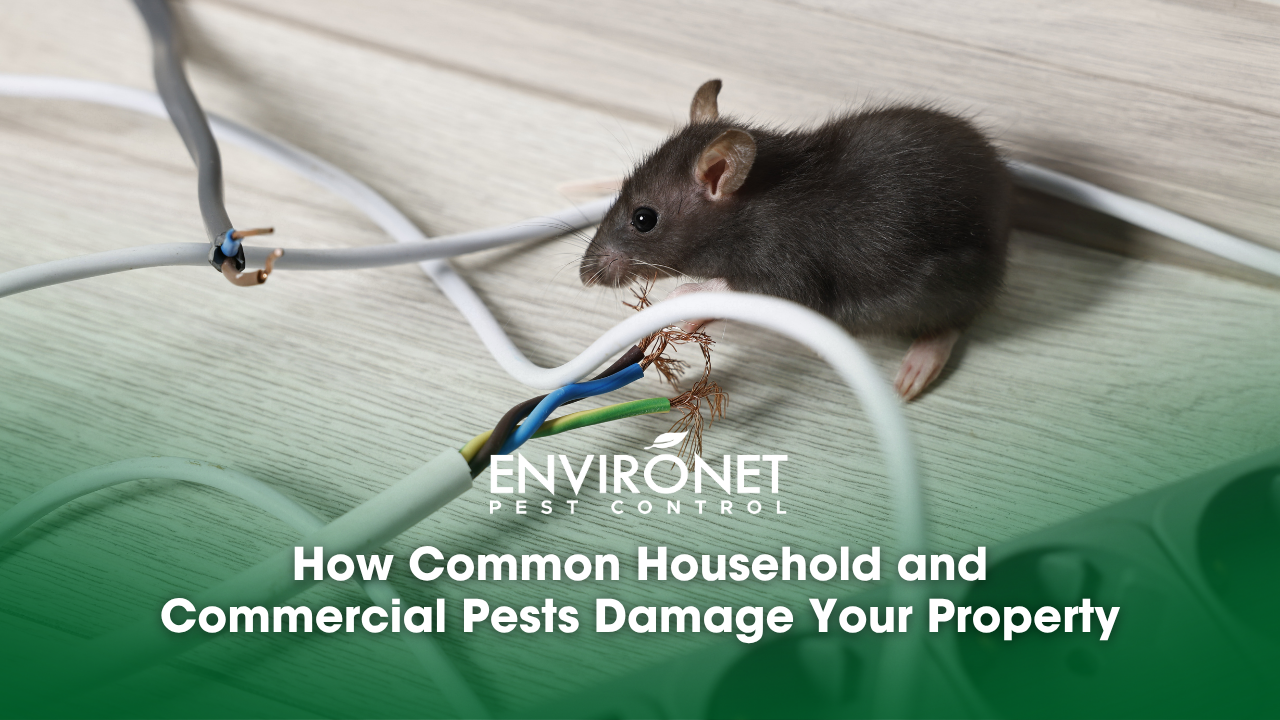
Rats and mice are among the most destructive pests found in residential and commercial buildings.
Their constantly growing teeth require them to gnaw on various materials, including wood, plastic, insulation, and electrical wiring.
Common damage caused by rodents includes:
- Chewed electrical wires that may create fire hazards
- Damaged insulation inside walls and ceilings
- Contaminated food and storage areas
- Damage to furniture, boxes, and stored products
Rodents can also leave droppings and urine throughout a property, creating sanitation concerns.
Cockroaches
Cockroaches are known for contaminating areas rather than causing structural damage.
They are commonly found in kitchens, food preparation areas, restaurants, offices, and residential buildings.
Problems associated with cockroaches include:
- Contamination of food and food-contact surfaces
- Unpleasant odors in heavily infested areas
- Staining caused by droppings
- Damage to paper products, cardboard, and packaging
Because cockroaches hide in cracks, drains, cabinets, and appliances, infestations can grow unnoticed.
Termites
Termites are among the most costly structural pests because they feed on wood and other cellulose-based materials.
Over time, termite activity can weaken important structural components without obvious external signs.
Common termite damage includes:
- Wooden beams and posts
- Door and window frames
- Cabinets
- Flooring
- Wooden furniture
Severe infestations may require expensive repairs if structural damage becomes extensive.
Ants
Although many ant species are more of a nuisance than a structural threat, large colonies can still create problems for property owners.
Ants may:
- Contaminate food supplies
- Invade kitchens and pantries
- Damage packaged goods while searching for food
- Establish nests inside walls, gardens, or pavement
Once ants discover a reliable food source, they leave scent trails that attract even more workers, making infestations difficult to control without proper treatment.
Why Early Detection Matters
Many pests remain hidden during the early stages of an infestation. Regular inspections and paying attention to warning signs—such as droppings, damaged materials, unusual odors, or increased pest sightings—can help identify problems before they become more serious.
The earlier pest activity is addressed, the easier it is to reduce the risk of property damage and prevent infestations from spreading.
Conclusion
Different pests cause different types of damage, but they all have one thing in common: the longer they remain unnoticed, the greater the potential impact on your property.
Understanding the risks associated with rodents, cockroaches, termites, and ants helps property owners make informed decisions about protecting their homes and businesses. Taking preventive measures and addressing pest activity early can save both time and money while maintaining a cleaner, safer environment. Be proactive and book us today!