How Rainy Weather Can Create Pest Problems
Last updated on August 26th, 2026 at 02:17 pm
When heavy rain affects a community, most people focus on the immediate concerns: flooding, transportation, safety, and property damage.
But after the rain, another set of problems may emerge.
Water accumulation, excess moisture, damaged structures, clogged drainage, and displaced pests can all create conditions that deserve attention.
For homes and commercial properties, post-rain inspection is an important part of prevention.
Moisture Can Affect More Than Comfort
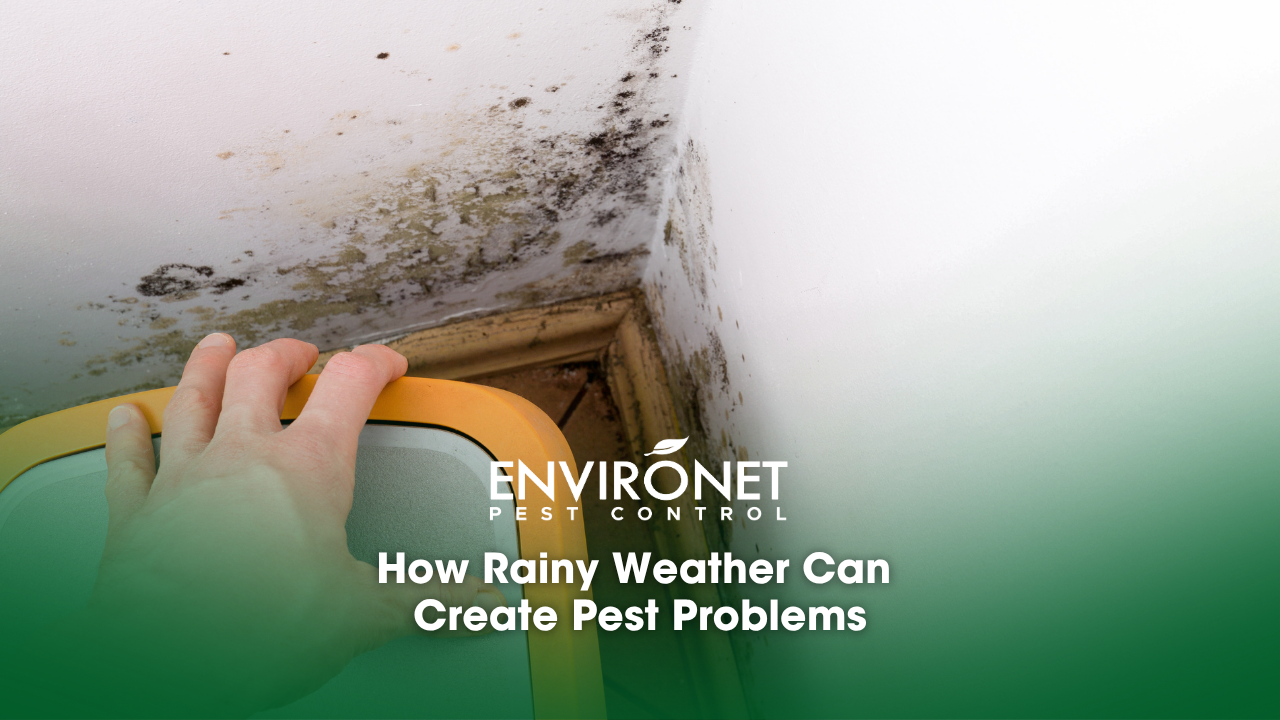
Persistent moisture can affect different parts of a building.
Leaks, damp walls, wet storage areas, and poorly ventilated spaces can create maintenance problems. Depending on the pest and environmental conditions, moisture may also contribute to conditions that support pest activity.
Cockroaches, ants, and other pests may be attracted to environments where food, water, and shelter are accessible.
That is why moisture management should be part of a property’s overall pest prevention strategy.
Rodents May Search for New Shelter
Heavy rains and flooding can disrupt outdoor rodent habitats.
When outdoor areas become saturated, rodents may move in search of shelter, food, and dry spaces. Buildings with accessible entry points may become more vulnerable.
Inspect areas such as:
- Door gaps
- Utility openings
- Damaged screens
- Gaps around pipes
- Unsealed wall penetrations
- Loading and receiving areas
- Storage rooms
Rodent prevention should combine exclusion, sanitation, monitoring, and appropriate control measures.
Drainage Problems Can Create Multiple Concerns
Blocked or poorly maintained drainage can allow water to accumulate around a property.
Standing water can contribute to sanitation issues and may create suitable conditions for mosquito breeding in certain environments. Overflowing drains may also spread waste and increase environmental contamination.
After heavy rainfall, inspect:
- Floor drains
- Outdoor drains
- Gutters
- Downspouts
- Catch basins
- Water collection areas
Regular maintenance can reduce the likelihood of water remaining around the property for extended periods.
Floodwater Can Carry Health Risks
Floodwater may contain contaminants, including pathogens and animal waste.
Health authorities have warned the public about leptospirosis and other rainy-season health concerns. The risk is especially important when contaminated water or soil comes into contact with wounds or mucous membranes.
For businesses and facilities, post-flood cleanup should prioritize worker safety.
Employees involved in cleanup may need appropriate protective equipment depending on the conditions and tasks involved. Follow applicable workplace safety guidance and local health advisories.
Outdoor Pest Prevention Protects the First Line of Defense
The perimeter of a property is often the first area to inspect after heavy rainfall.
Look for:
- Standing water
- Damaged landscaping
- Overflowing waste areas
- Rodent signs
- Pest harborages
- Gaps and openings
- Vegetation touching the building
- Damaged drainage systems
Professional pest control treatments can be applied strategically as part of a broader pest management program. However, treatment alone cannot solve every environmental condition.
The best results come from combining treatment with sanitation, exclusion, drainage management, and regular monitoring.
A Post-Rain Inspection Can Make a Difference
After prolonged rain or flooding, create a simple inspection routine.
- Check the outside – Inspect the perimeter, drainage, waste areas, vegetation, and possible entry points.
- Check for water – Remove unnecessary standing water and identify areas where water repeatedly accumulates.
- Check the inside – Look for leaks, damp areas, pest activity, and signs of rodent access.
- Check sanitation – Make sure waste is properly stored and food sources are not easily accessible.
- Check for pest activity – Look for droppings, gnaw marks, insect activity, damaged materials, and unusual pest sightings.
Prevention Should Continue After the Weather Clears
Pest prevention is not a one-time activity.
Weather conditions can change quickly, and properties should be prepared to respond to the environmental effects that follow.
A proactive approach can help identify risks before they develop into larger pest or sanitation problems. Book today!