
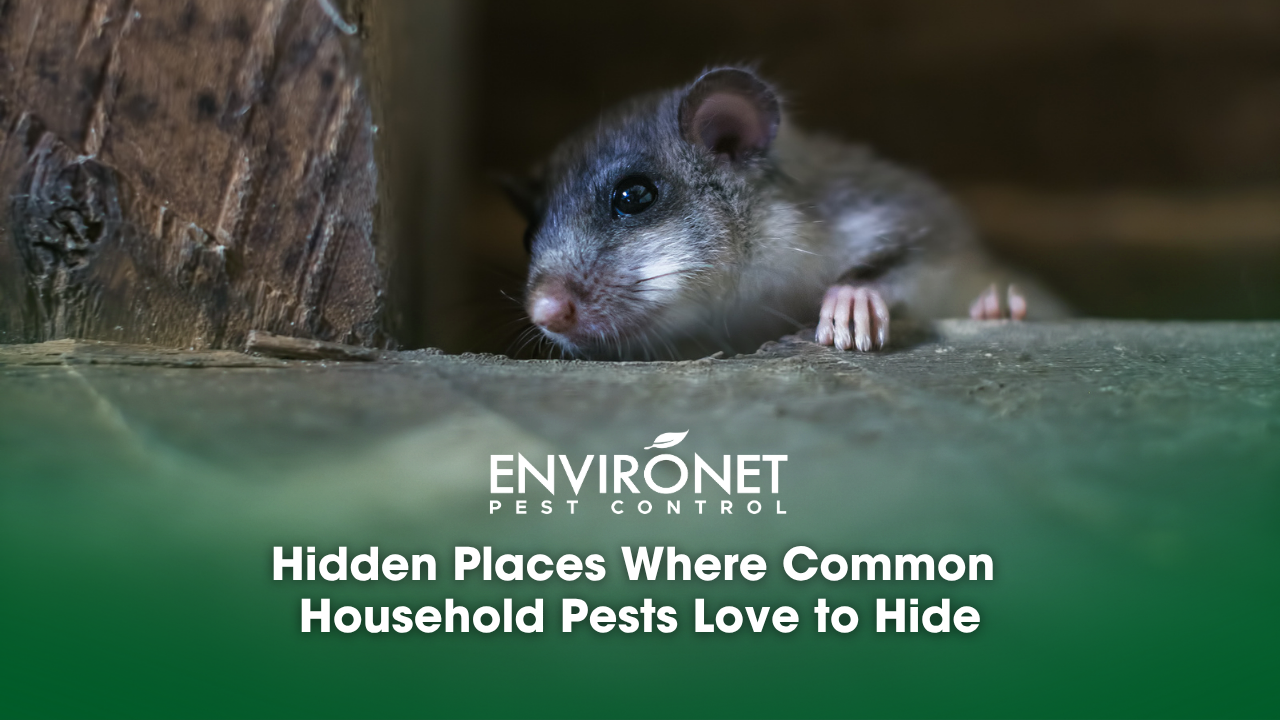
Hidden Places Where Common Household Pests Love to Hide
Last updated on July 14th, 2026 at 10:35 am
Finding a cockroach in your kitchen or a trail of ants on your countertop is never pleasant. But what many homeowners and business owners don’t realize is that the pests you see are only a small part of the problem. Most pests spend their time hiding in dark, quiet, and undisturbed areas, making infestations difficult to detect until they become more serious.
Knowing where pests like to hide can help you spot warning signs early and prevent larger infestations.
Why Pests Prefer Hidden Areas
Pests look for places that provide everything they need to survive:
- Food
- Water
- Shelter
- Warmth
- Protection from people and predators
Hidden spaces inside homes and commercial buildings often provide ideal conditions for pests to breed and multiply unnoticed.
Common Hiding Places for Household Pests
Behind Kitchen Appliances
Refrigerators, ovens, microwaves, and dishwashers often trap crumbs, grease, and moisture. Cockroaches, ants, and rodents are commonly found behind or underneath these appliances.
Under Sinks
Leaks and condensation create damp environments that attract cockroaches, ants, and other moisture-loving pests.
Inside Cabinets and Pantries
Stored food, cardboard packaging, and infrequently cleaned shelves can attract ants, cockroaches, and pantry pests.
Ceiling Voids and Roof Spaces
Rodents often use ceiling cavities as nesting areas. You may hear scratching sounds at night before you ever see them.
Cracks and Gaps in Walls
Small openings around pipes, windows, and doors provide excellent hiding spots and entry points for insects.
Storage Rooms and Cluttered Areas
Boxes, old newspapers, unused furniture, and stored items create perfect shelter for pests.
Garbage Storage Areas
Bins that are not cleaned regularly attract flies, cockroaches, rodents, and ants.
Warning Signs You Shouldn’t Ignore
Watch for these early indicators:
- Droppings
- Gnaw marks
- Grease trails
- Shed insect skins
- Egg cases
- Unusual odors
- Scratching noises
- Increased pest sightings
Prevention Tips
- Clean hidden areas regularly.
- Repair leaking pipes.
- Seal cracks and openings.
- Keep storage areas organized.
- Store food in sealed containers.
- Dispose of garbage properly.
- Schedule regular pest inspections.
Don’t Wait Until Pests Become Visible
By the time pests are regularly seen during the day, the infestation may already be well established. Regular inspections help identify hidden pest activity before it becomes a costly problem. Schedule your FREE inspection today!