
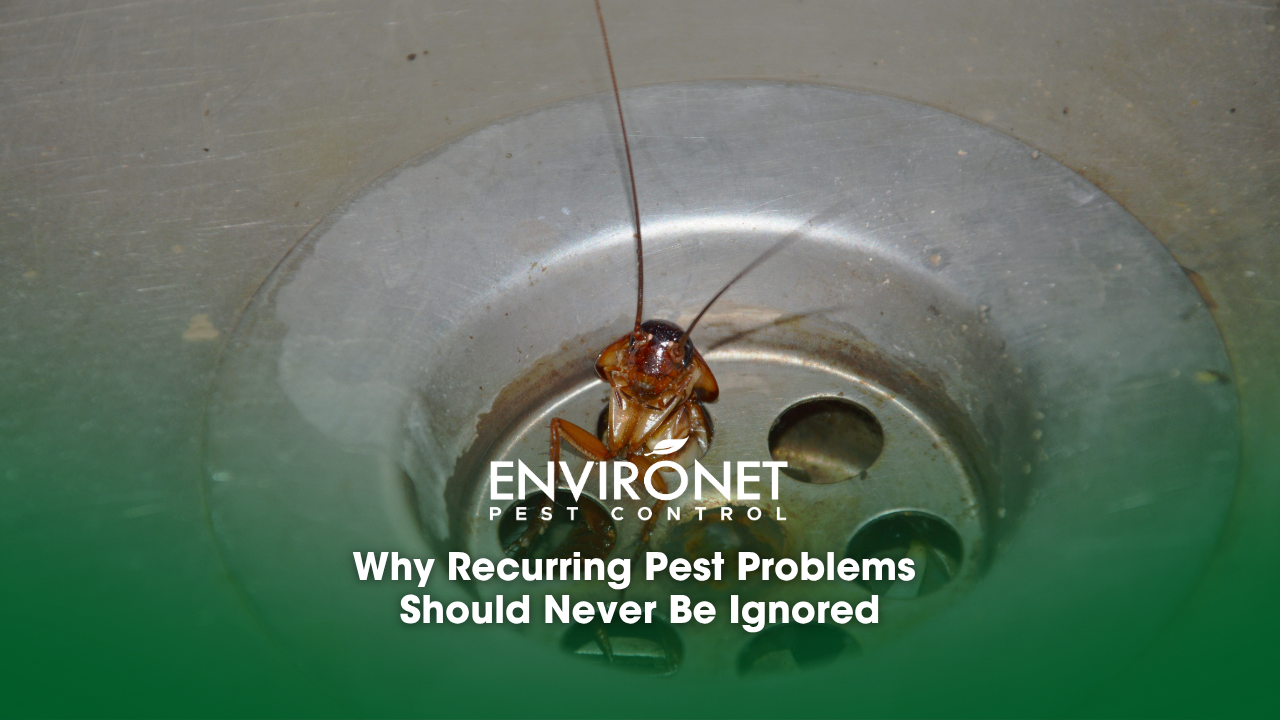
Why Recurring Pest Problems Should Never Be Ignored
Last updated on September 3rd, 2026 at 01:40 pm
Seeing a cockroach in the kitchen, ants near a food preparation area, or signs of rats around a property may seem like an isolated incident.
But what happens when the same pest problem keeps coming back?
Recurring pest activity can be a sign that the visible pests are only part of the problem. Instead of repeatedly eliminating the pests you see, it may be necessary to determine what is attracting them, where they are entering, and whether there are conditions around the property that allow them to survive.
Why Do Pest Problems Keep Coming Back?
Pests need basic resources to survive, including food, water, shelter, and access to suitable areas where they can hide or reproduce.
When these conditions remain available, pest activity may continue even after visible pests have been removed.
Some possible reasons include:
1. Entry Points Around the Property
Small gaps, cracks, openings around doors, pipes, drainage systems, windows, and utility lines may allow pests to enter a building.
Rodents, insects, and other pests can take advantage of openings that may be difficult to notice during normal daily activities.
Identifying and addressing possible entry points can be an important part of long-term pest management.
2. Accessible Food Sources
Food does not always have to be left openly exposed to attract pests.
Crumbs, improperly stored food, overflowing garbage bins, grease accumulation, pet food, and food residue can provide pests with enough resources to remain active.
Commercial kitchens, restaurants, offices, warehouses, and residential properties should regularly review food storage and waste management practices.
3. Water and Moisture
Pests also need water.
Leaking pipes, clogged drains, standing water, condensation, poorly ventilated areas, and excessive moisture can make a property more attractive to certain pests.
During the rainy season, moisture-related conditions may become even more common.
4. Hidden Nesting or Breeding Areas
Some pests spend much of their time in areas that are rarely inspected.
These may include:
• Wall voids
• Storage areas
• Roof spaces
• Cabinets
• Drainage systems
• Cluttered rooms
• Areas behind equipment
• Landscaping around the property
Removing only the pests that are visible may not address activity occurring in these hidden areas.
5. Environmental Conditions
Sometimes the surrounding environment contributes to pest activity.
Nearby construction, flooding, heavy rainfall, vegetation, drainage problems, waste accumulation, or changes around neighboring properties may disturb pests and encourage them to search for new shelter.
Why Repeated DIY Treatment May Not Be Enough
Sprays, traps, and other pest control products may help manage individual pests.
However, repeated treatment without identifying the source of the problem can sometimes lead to a cycle:
A pest appears.
It is treated.
The visible activity disappears.
A few days or weeks later, the pest returns.
When this happens repeatedly, it may be time to look beyond the individual pest and assess the conditions contributing to the activity.
Warning Signs That May Require Professional Attention
Consider requesting professional pest control assistance when:
• Pest activity continues despite repeated treatment
• You regularly see pests during normal operating hours
• Droppings, damaged packaging, gnaw marks, nests, or pest trails are present
• Multiple areas of the property are affected
• Employees, customers, tenants, or family members are reporting pest sightings
• The pest problem appears to be getting worse
• You are unsure where the pests are coming from
Early assessment can help determine what may be contributing to the problem and what pest management approach may be appropriate.
Prevention Is Part of Pest Management
Effective pest management is not only about eliminating pests.
It also involves reducing the conditions that allow pests to enter, survive, and reproduce.
Good preventive practices may include:
• Proper waste management
• Regular cleaning
• Correct food storage
• Repairing leaks
• Removing standing water
• Sealing potential entry points
• Reducing unnecessary clutter
• Regularly inspecting vulnerable areas
• Monitoring for signs of pest activity
Businesses may also benefit from establishing a regular pest management and monitoring program instead of waiting for a serious infestation before taking action.
Do Not Ignore a Pest Problem That Keeps Returning
Recurring pest activity should not automatically be considered normal.
If the same pest problem continues to appear, there may be an underlying condition that needs to be identified.
Understanding the source of the problem is an important step toward choosing the appropriate solution.
Need Help With a Recurring Pest Problem?
Environet Pest Control can help assess your pest concern and recommend an appropriate pest management approach for your property. FREE Consultation.