
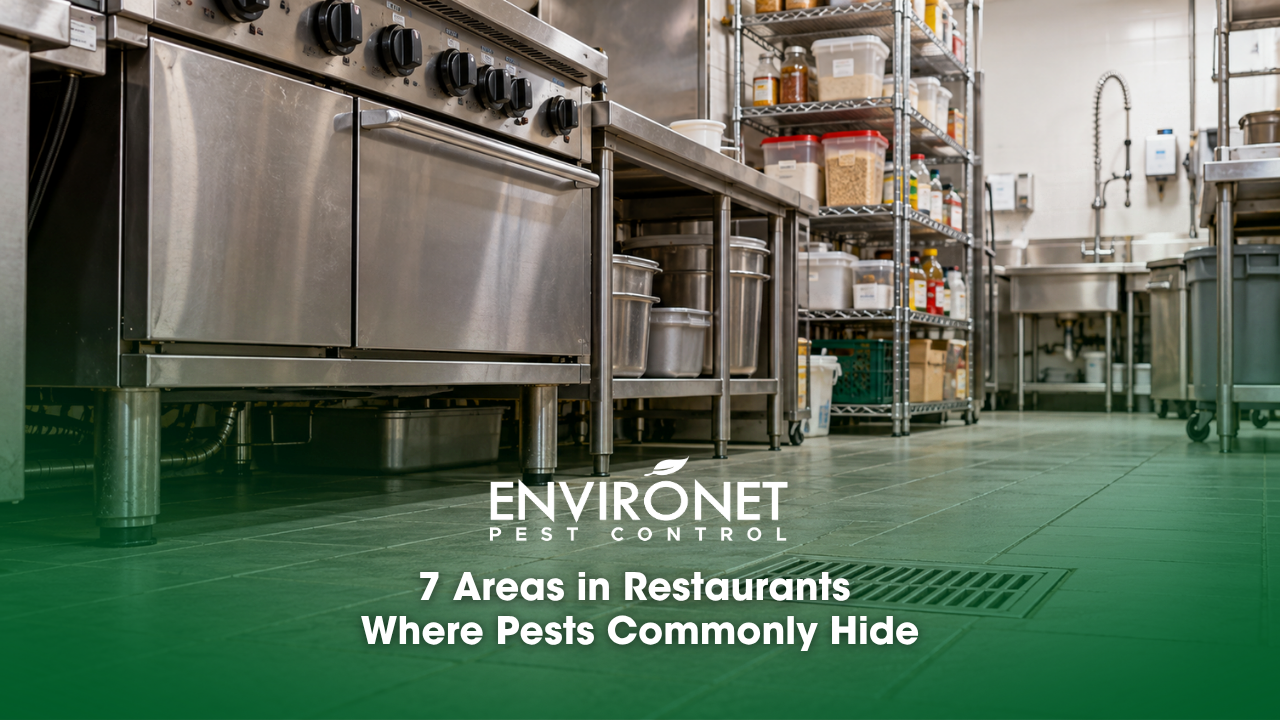
7 Areas in Restaurants Where Pests Commonly Hide
Last updated on October 9th, 2026 at 01:50 pm
A restaurant may look spotless to customers while pests remain hidden in areas they rarely see.
Many common pests prefer dark, warm, moist, or undisturbed spaces close to food and water sources. Knowing where these pests are likely to hide can help restaurant owners and facility managers improve monitoring and prevention.
Seven areas that deserve regular attention
1. Kitchen Preparation Areas
Restaurant kitchens offer many things pests need, including food, warmth, moisture, and shelter.
Crumbs, grease, food spills, and residues can accumulate around preparation tables, cooking areas, walls, and floors.
Pay particular attention to:
- Corners and floor edges
- Behind cabinets
- Under preparation tables
- Around cooking equipment
- Areas where food frequently spills
Regular cleaning and inspection can help reduce conditions that attract pests.
2. Drains and Sinks
Drains are often overlooked because much of the buildup happens below the surface.
Food particles, grease, moisture, and organic material can collect inside or around drains. These conditions may attract flies, cockroaches, and other pests.
Restaurants should keep drains clean, address leaks promptly, and avoid allowing standing water to accumulate.
3. Storage Rooms
Storage rooms can provide excellent hiding places for pests, especially when they contain cardboard boxes, stacked goods, and rarely moved items.
Good storage practices include:
- Keeping products off the floor
- Avoiding excessive clutter
- Checking incoming deliveries
- Rotating stock regularly
- Inspecting damaged packaging
Organized storage also makes it easier to identify signs of pest activity.
4. Under and Behind Equipment
Large kitchen appliances are difficult to move frequently, which makes the spaces underneath and behind them easy to overlook.
Grease, crumbs, moisture, and food debris can accumulate behind refrigerators, ovens, freezers, dishwashers, and other equipment.
These hidden areas should be included in scheduled deep cleaning and inspection routines.
5. Waste and Garbage Areas
Garbage is one of the strongest pest attractants in any food establishment.
Waste areas may attract flies, cockroaches, rodents, ants, and other pests when bins are left open, waste accumulates, or spills are not cleaned immediately.
Use properly covered bins, remove waste regularly, and clean the surrounding area frequently.
6. Ceilings and Utility Spaces
Pests are not limited to floors and kitchens.
Rodents and other pests may use ceiling voids, utility areas, wall spaces, pipe openings, and service areas for shelter or movement throughout a building.
Unusual noises, droppings, damaged materials, or gnaw marks may indicate activity in these hidden spaces.
7. Doors, Windows, and Other Entry Points
Sometimes the problem begins outside the establishment.
Pests may enter through:
- Gaps beneath doors
- Damaged screens
- Cracks in walls
- Openings around pipes
- Delivery entrances
- Frequently opened doors
Checking and sealing potential entry points is an important part of pest prevention.
Prevention Starts With Knowing Where to Look
Pests often remain unnoticed because they hide in areas that are difficult to see during normal restaurant operations.
Regular inspections, good sanitation, organized storage, proper waste management, and professional pest control can help reduce the conditions that allow pest problems to develop.
Environet Pest Control provides pest management solutions for restaurants, cafés, and commercial establishments. Book a FREE consultation today.