
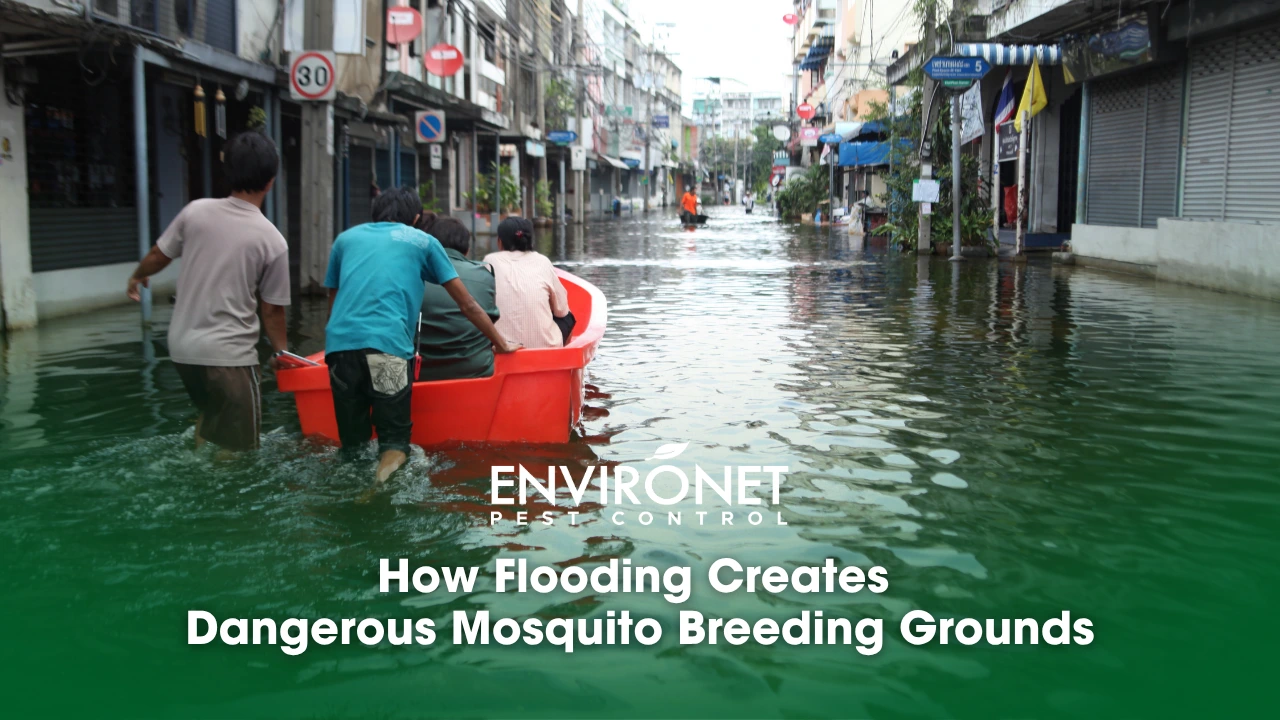
How Flooding Creates Dangerous Mosquito Breeding Grounds
Flooding is a common problem during the rainy season in the Philippines. Heavy rains, overflowing drainage systems, and stagnant floodwater can affect homes, businesses, and communities in many ways. But beyond the visible damage, flooding also creates a serious health concern that is often overlooked — mosquito breeding.
Mosquito populations can rapidly increase after floods, raising the risk of mosquito-borne diseases such as dengue, chikungunya, and malaria in some areas. Understanding why this happens can help families and property owners take preventive action before mosquito infestations become a bigger problem.
Why Flooding Leads to More Mosquitoes
Mosquitoes need water to reproduce. Female mosquitoes lay their eggs in stagnant or slow-moving water, where the larvae develop before becoming adult mosquitoes.
After flooding, water often remains trapped in:
- Clogged canals and drainage systems
- Puddles around homes and buildings
- Discarded containers and garbage
- Roof gutters
- Construction areas
- Plant pots and outdoor furniture
- Flooded basements or low-lying areas
Even small amounts of standing water can become breeding sites within just a few days.
Warm temperatures and high humidity during the rainy season also create ideal conditions for mosquitoes to multiply faster.
Areas Around the Home That Need Attention
Many mosquito breeding spots are hidden in places people rarely check. After heavy rains or floods, inspect areas such as:
- Water collected in old tires
- Open drums and containers
- Pet water bowls
- Unused buckets
- Tarpaulins holding rainwater
- Drainage systems with poor water flow
- Outdoor trash bins
- Air conditioning drip trays
Mosquitoes can breed quickly if these areas are left unattended.
How to Reduce Mosquito Breeding After Flooding
Preventing mosquito infestations starts with reducing standing water and improving sanitation around the property.
Here are some practical ways to help protect your home and family:
1. Remove Standing Water
Empty containers that collect rainwater and dry them thoroughly whenever possible.
2. Clean Drainage Systems
Keep canals, gutters, and drains free from leaves, mud, and debris to prevent water buildup.
3. Dispose of Garbage Properly
Improper waste disposal creates more areas where water can collect.
4. Maintain Outdoor Areas
Trim vegetation and keep surroundings clean to reduce mosquito resting areas.
5. Use Screens and Protective Measures
Install window screens and use mosquito repellents when necessary.
6. Schedule Professional Mosquito Control
Large mosquito populations may require professional treatment, especially after major flooding events.
Why Prevention Matters
Mosquito control is most effective when breeding sites are addressed early. Waiting until mosquito populations increase can make infestations more difficult to manage.
For homes, schools, offices, commercial establishments, and residential communities, preventive measures can help reduce health risks and create a safer environment during the rainy season.
At Environet Pest Control, we help property owners manage mosquito problems through professional inspection, treatment, and prevention solutions tailored for residential and commercial spaces.
With over 25 years in the pest control industry, our team remains committed to helping families and businesses maintain cleaner, safer, and healthier environments — especially during the rainy season when mosquito activity becomes more aggressive.
Protect your surroundings before mosquito breeding becomes a serious health concern. Book our Mosquito Control today!