
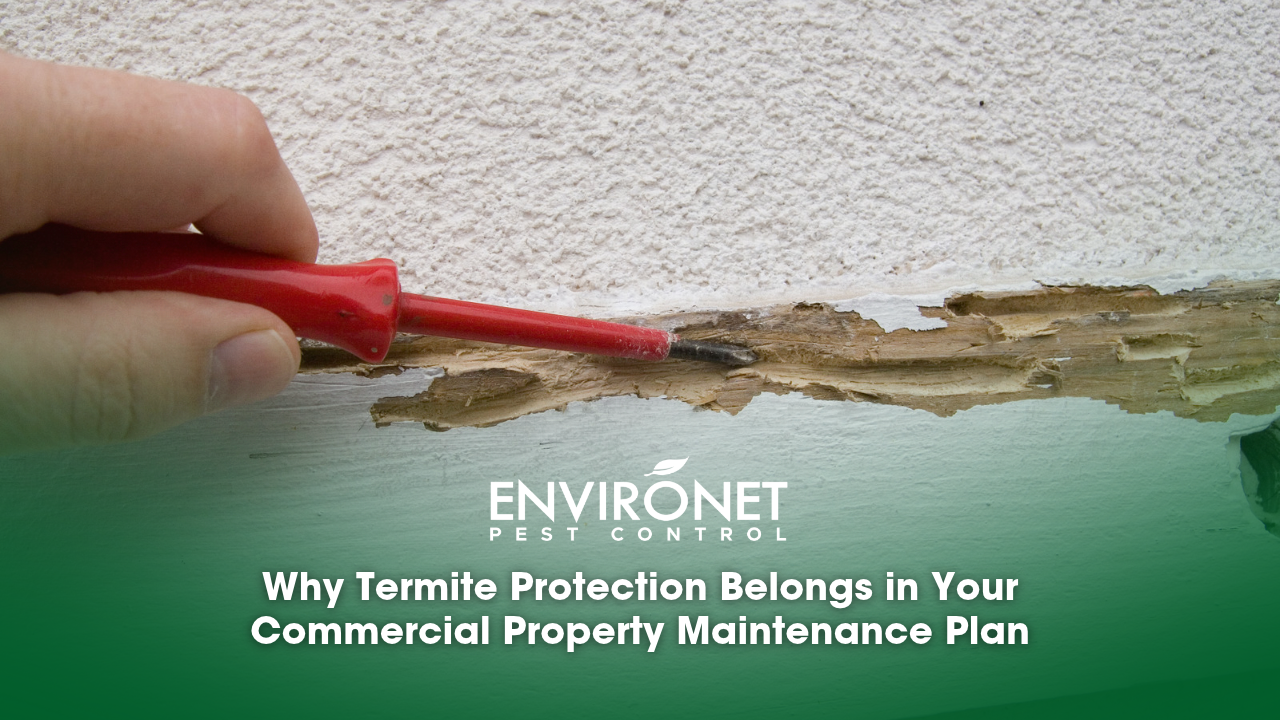
Why Termite Protection Belongs in Your Commercial Property Maintenance Plan
Last updated on November 13th, 2026 at 11:02 am
Managing a commercial property involves maintaining the building, protecting assets, and providing a suitable environment for employees, tenants, and customers.
From electrical systems to plumbing and structural maintenance, building managers regularly monitor conditions that could interfere with daily operations.
But one important maintenance concern is sometimes overlooked: termite activity.
Termite protection should be considered part of a commercial property’s preventive maintenance strategy, particularly when the property contains wooden fixtures, concealed timber, or areas vulnerable to subterranean termite entry.
Why Commercial Properties Can Be Vulnerable to Termites
Termites are not limited to residential houses.
Commercial buildings may also contain materials and conditions suitable for termite activity.
These can include wooden partitions, cabinets, decorative finishes, doorframes, landscaping materials, and concealed wood near foundations or utility areas.
Some termites can gain access through soil beneath or around buildings, while others may infest suitable wooden materials directly.
Even modern buildings that are primarily constructed from concrete and steel may contain wooden components that termites can damage.
1. Termite Activity Can Affect Building Maintenance
Commercial properties require ongoing maintenance to preserve building conditions.
When termite activity goes unnoticed, damage may accumulate in wooden fixtures, fittings, and other vulnerable areas.
This can create additional maintenance requirements, including replacing damaged materials, conducting repairs, or investigating the extent of an infestation.
Adding termite checks to an existing maintenance routine helps ensure that possible warning signs are not overlooked.
2. Repairs May Interrupt Business Operations
Repairing damaged wooden components in a commercial facility may require temporary access restrictions, maintenance scheduling, or coordination with tenants.
For businesses operating daily, these disruptions can create inconvenience.
For example, a restaurant may need to repair damaged cabinetry, while an office may need to replace affected partitions or doorframes.
The impact depends on the extent and location of the damage.
Preventive termite management can help reduce the risk of undetected activity developing into a more extensive problem.
3. Termite Risks Extend Beyond Visible Wooden Furniture
Commercial property owners sometimes assume that termites are only a concern when wooden furniture is present.
However, termites may also affect concealed timber, wooden framing, built-in fixtures, and other cellulose-based materials.
Potential areas to assess include:
-
Wooden cabinets and built-in storage
-
Doorframes and wooden partitions
-
Wooden decorative fixtures
-
Building perimeters and landscaped areas
-
Areas with persistent moisture or wood-to-soil contact
-
Accessible service and utility spaces
The appropriate inspection priorities depend on the building’s construction, maintenance history, and termite risk.
4. Termite Protection Supports Asset Management
Commercial property maintenance involves protecting assets that may be expensive to repair or replace.
Wooden fixtures and building components represent part of that investment.
When termites damage these materials, the property owner or facility manager may face unplanned repair costs.
A planned termite management program can help property managers identify vulnerabilities, respond to evidence of termite activity, and coordinate appropriate treatment when necessary.
5. Maintenance Records Support Better Decisions
Commercial properties often depend on documented maintenance procedures.
Termite management can be included in this recordkeeping system.
Useful information may include:
-
Inspection dates and observed conditions
-
Areas showing possible termite activity
-
Treatment recommendations and completed services
-
Follow-up monitoring findings
-
Repairs or maintenance actions taken
-
Future inspection schedules
Consistent documentation can help facility managers understand recurring risks and make more informed maintenance decisions.
6. Professional Termite Management Should Match the Property
No two commercial buildings are exactly alike.
The appropriate termite treatment depends on the termite species, infestation conditions, construction type, property layout, and treatment objectives.
For example, Environet offers several termite management solutions, including pre-construction soil treatment, post-construction chemical treatment, and termite baiting systems.
A professional assessment helps determine which approach is appropriate.
Some treatments also require continued monitoring, maintenance, or follow-up inspections to evaluate termite activity and treatment performance.
Make Termite Management Part of Your Maintenance Plan
Protecting a commercial property involves identifying risks before they become larger problems.
While not every property faces the same termite exposure, routine inspection and appropriate professional management can help businesses maintain a proactive approach.
Rather than waiting for extensive wood damage, property owners and facility managers can incorporate termite protection into regular property assessment and maintenance planning.
Let Environet help protect your commercial property.