Why Termite Damage Costs More Than Most Property Owners Expect
Termites are among the most destructive structural pests because they can quietly damage properties for months or even years before being discovered. Many property owners underestimate the true cost of termite infestations, assuming repairs are limited to visible wood damage.
In reality, termite infestations often lead to expensive structural repairs, recurring maintenance issues, and long-term property risks if left untreated.
How Termites Damage Wood From the Inside Out
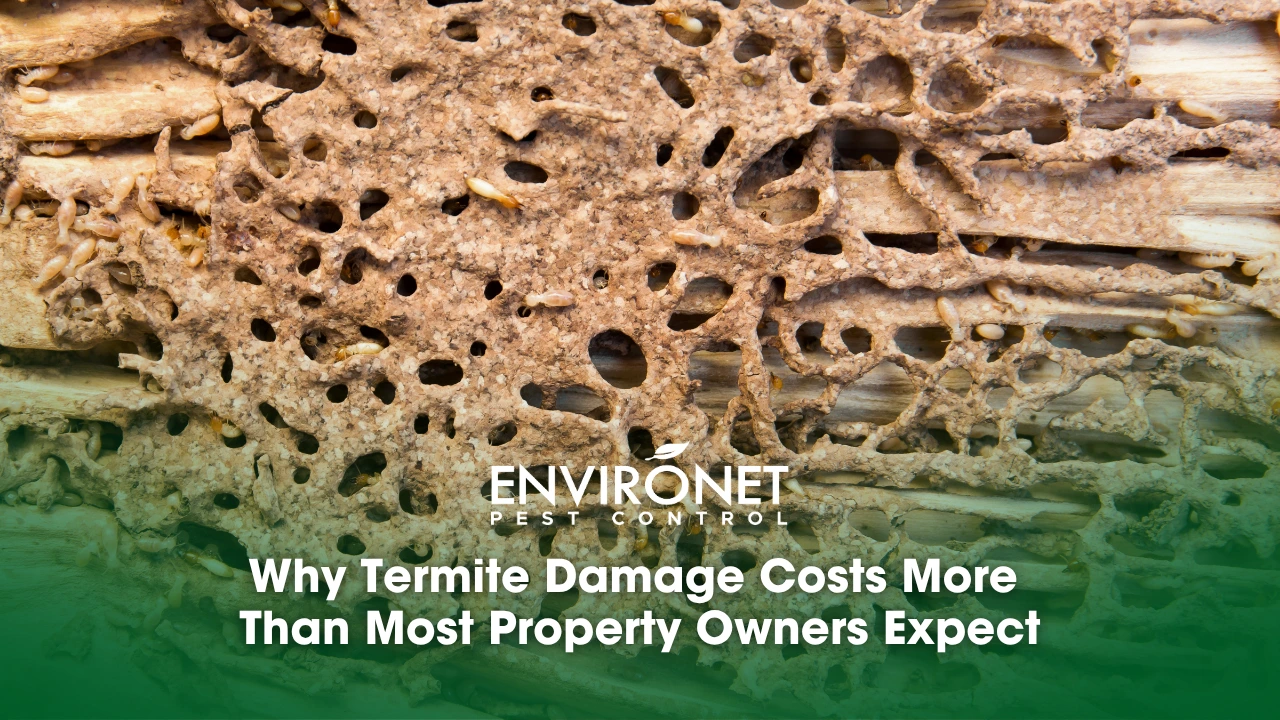
Termites consume wood and other cellulose-based materials from the inside, leaving only thin outer layers intact. Because the damage develops internally, infested wood may still appear normal on the surface while becoming structurally weak underneath.
As termite colonies continue feeding, they can compromise:
- Wooden beams
- Flooring systems
- Ceiling supports
- Wall partitions
- Door and window frames
- Built-in cabinets and furniture
By the time visible damage appears, the infestation may already be extensive.
Common Areas Termites Attack
Termites typically target areas with moisture and wood contact. Common infestation areas include:
- Foundations and subfloors
- Roofing structures
- Wooden walls and partitions
- Utility entry points
- Storage areas
- Landscaping wood and tree stumps
Properties with poor drainage, leaks, or excess moisture are often more vulnerable to termite activity.
Hidden Costs of Termite Infestations
The true cost of termites goes beyond replacing damaged wood. Property owners may also face:
- Structural reinforcement expenses
- Interior renovation costs
- Temporary relocation during repairs
- Reduced property value
- Business interruptions for commercial establishments
- Ongoing maintenance and monitoring expenses
In severe cases, untreated termite infestations can lead to major reconstruction work that costs significantly more than preventive treatment.
Why Cosmetic Repairs Are Not Enough
Simply repainting damaged surfaces or replacing visible wood does not solve the root problem. If the active termite colony remains untreated, termites can continue spreading and damaging other parts of the structure.
Many infestations persist because only the visible damage was repaired while the source colony remained active.
Professional termite treatment focuses not only on damaged areas but also on identifying and managing the source of infestation.
Importance of Long-Term Termite Management
Effective termite control requires long-term management rather than temporary solutions. Environet’s termite prevention and control programs include:
- Thorough inspection
- Targeted treatment applications
- Monitoring systems
- Preventive recommendations
- Regular maintenance inspections
Long-term management helps reduce the risk of recurring infestations and protects the structural integrity of the property.
Benefits of Preventive Treatment
Preventive termite treatment offers several long-term advantages:
- Reduced risk of costly structural repairs
- Early detection of termite activity
- Improved property protection
- Better long-term maintenance planning
- Increased peace of mind for property owners
Prevention is often far more cost-effective than repairing extensive termite damage after an infestation has spread.
Protect Your Property From Costly Termite Damage
Termites can silently create serious financial and structural problems when infestations are left untreated. The longer termite activity continues, the more expensive repairs and restoration can become.
Environet Pest Control helps protect your property through proper inspection, treatment, and long-term prevention strategies.
Protect your property today with professional termite control solutions designed to help prevent costly damage. Book now!