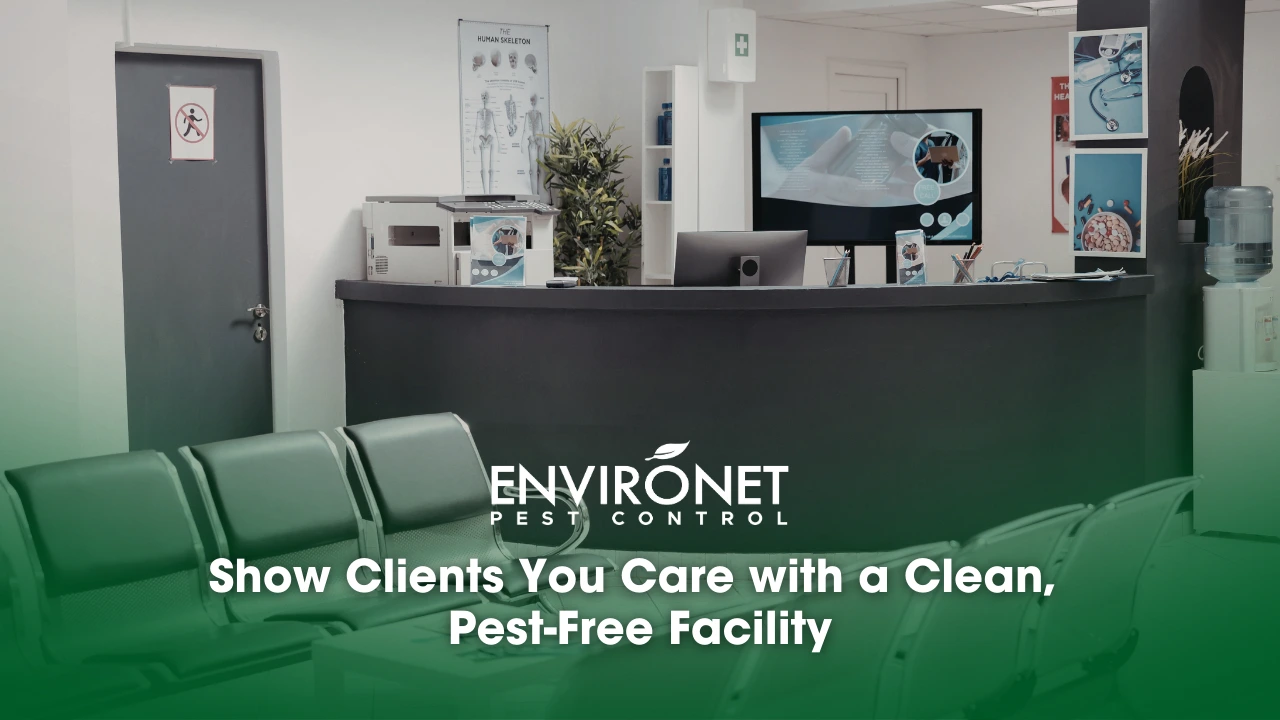
Show Clients You Care with a Clean, Pest-Free Facility
Last updated on March 9th, 2026 at 08:57 am
First impressions are powerful.
Before clients notice your presentation, your pricing, or even your service quality — they notice your environment. A clean, organized, and pest-free facility silently communicates professionalism, safety, and attention to detail.
And in business, those silent messages matter.
Why Cleanliness Is More Than Just Appearance
A clean facility isn’t just about aesthetics. It reflects how you manage your operations behind the scenes.
When pests are present — even occasionally — it can signal:
-
Poor maintenance
-
Weak sanitation systems
-
Lack of preventive protocols
-
Risk to health and safety
Clients may not say it out loud, but they will remember it.
On the other hand, a pest-free environment builds confidence. It reassures visitors that you value quality control, hygiene, and their overall experience.
The Hidden Risk of Waiting Until You See Pests
Many businesses only act when pests become visible.
But here’s the reality:
If you’re already seeing cockroaches, rodents, ants, or flies during operating hours, the infestation may already be established behind walls, ceilings, storage areas, or drains.
Pests reproduce quickly. What starts as “just one or two” can escalate into:
-
Contamination risks
-
Property damage
-
Negative client impressions
-
Potential compliance issues
Prevention is always more cost-effective than emergency treatment.
Different Industries, Same Standard: Pest-Free
Regardless of your industry, maintaining a pest-free space protects your reputation.
Hospitality & Hotels
Guests expect comfort, cleanliness, and safety. A single pest sighting can lead to complaints, refunds, or damaging reviews. Preventive pest control protects both your brand and guest satisfaction.
Healthcare Facilities
In medical environments, hygiene is non-negotiable. Pest presence can compromise sanitation standards and patient trust. Routine monitoring and preventive treatments help maintain strict compliance and safety.
Offices & Corporate Spaces
Clients visiting your office form impressions within seconds. A fresh, pest-free workspace reinforces professionalism and operational excellence.
Food & Production Facilities
In food-related businesses, pest control is directly tied to safety and regulatory compliance. Preventive systems reduce contamination risks and protect consumer trust.
Prevention: The Smart Business Decision
Effective pest management isn’t about spraying when there’s a problem. It’s about building a system.
Did you know that 70% of effective pest control comes from good housekeeping, 25% from proper building maintenance, and only 5% from the use of pesticides?
That means:
-
Proper waste management
-
Sealing entry points
-
Routine inspections
-
Scheduled treatments
-
Staff awareness and reporting protocols
These proactive steps create a protective barrier before infestations begin.
What a Preventive Pest Control Program Looks Like
A professional preventive program typically includes:
-
Detailed site inspection
-
Identification of risk areas
-
Customized treatment plan
-
Scheduled monitoring
-
Documentation and reporting
-
Recommendations for structural and sanitation improvements
This approach shifts pest control from reactive to strategic.
The Message You Send
When clients walk into your facility and see a clean, well-maintained environment, you’re telling them:
-
We are responsible.
-
We are detail-oriented.
-
We protect what matters.
-
We care about your safety and experience.
A pest-free facility is more than a maintenance task — it’s a business statement.
Final Thoughts
Showing clients you care isn’t always about grand gestures. Often, it’s about the invisible standards you uphold daily.
By investing in preventive pest control and maintaining a clean facility, you protect:
-
Your reputation
-
Your assets
-
Your compliance
-
Your client relationships
Because in business, care isn’t just something you say — it’s something people see.