
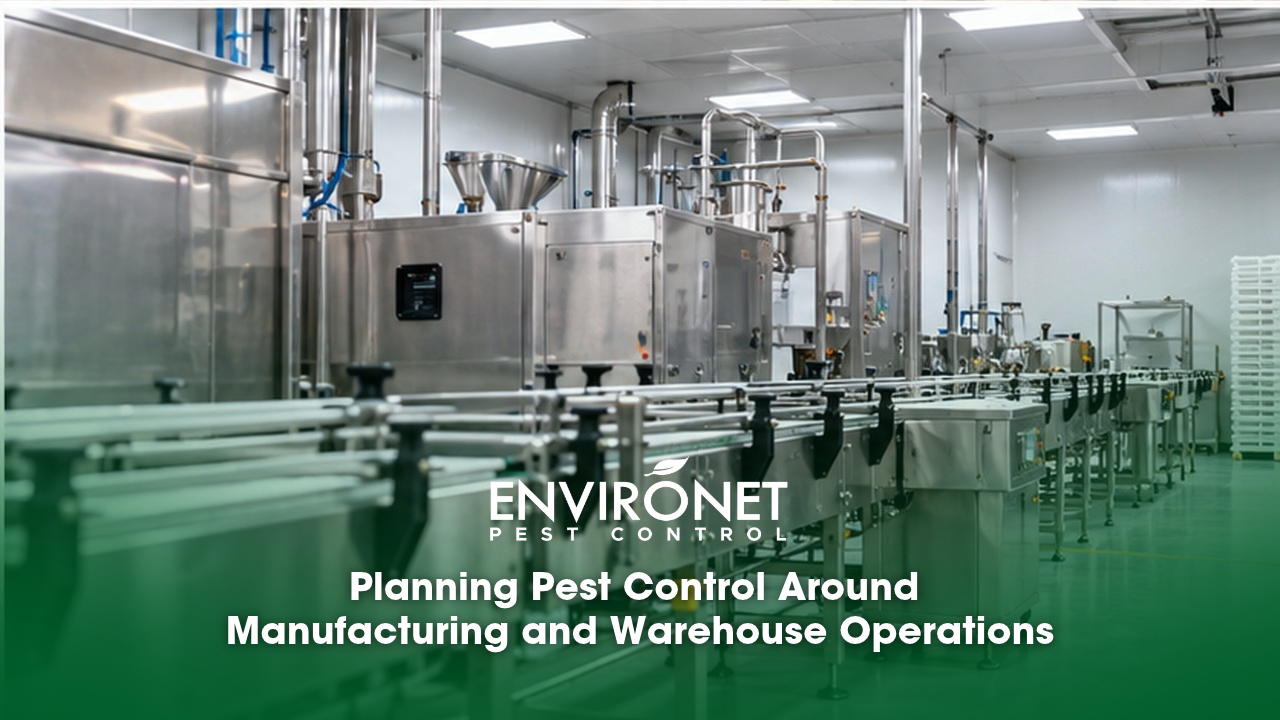
Planning Pest Control Around Manufacturing and Warehouse Operations
Last updated on November 6th, 2026 at 10:43 am
In manufacturing plants, warehouses, and industrial facilities, maintaining smooth operations is a daily priority.
Production schedules, employee safety, inventory movement, equipment maintenance, and quality requirements all need careful coordination.
However, another important responsibility should not be overlooked: industrial pest control.
Pest problems can affect stored materials, workplace hygiene, equipment, and operational efficiency.
The challenge for many businesses is finding a way to implement effective pest management without unnecessarily interfering with daily activities.
With proper planning and coordination, pest prevention can become a practical part of facility operations.
Why Pest Control Requires Careful Planning in Industrial Facilities
Unlike residential properties, industrial facilities often operate with complex schedules and controlled environments.
Some businesses run multiple production shifts, while others maintain continuous operations or handle products that require strict hygiene and handling procedures.
These conditions can affect when and how pest control activities should be performed.
A well-coordinated pest management program considers the facility’s layout, operational schedule, pest risks, and applicable safety requirements before any treatment takes place.
1. Identify the Facility’s Operational Requirements
Before scheduling pest control, facility managers should assess which areas require special precautions.
These may include:
-
Active production and processing areas
-
Raw material and finished product storage
-
Packaging sections
-
Equipment and maintenance rooms
-
Loading docks and receiving bays
-
Employee facilities
-
Restricted or controlled environments
Understanding how these areas operate helps determine appropriate inspection access, service arrangements, and necessary preparations.
Not every area requires the same pest management approach.
2. Coordinate Pest Control With Production Schedules
Industrial facilities may need to schedule certain treatments during non-production hours, planned maintenance periods, or other approved service windows.
The appropriate schedule depends on the treatment method, product label requirements, facility conditions, and potential exposure risks.
For example, monitoring device inspections may be possible during routine operations, while certain pesticide applications may require additional preparation, restricted access, or temporary suspension of affected activities.
Facility managers should coordinate with their pest control provider to determine the safest and most practical arrangements.
Important: Pest control should never be rushed or performed in a manner that compromises employee safety, product protection, or required operating procedures.
3. Protect Materials, Products, and Equipment
Preventing contamination is an important consideration when planning pest control in industrial environments.
Before applicable treatments, facility personnel may need to:
-
Secure or remove exposed products and materials.
-
Protect sensitive equipment where required.
-
Identify restricted treatment areas.
-
Coordinate access with maintenance and safety personnel.
-
Follow approved preparation and re-entry instructions.
Specific preparations should be based on the treatment method, product instructions, and site-specific requirements.
For food-processing and other sensitive facilities, pest management activities must also be compatible with applicable hygiene and product safety procedures.
4. Assign Clear Responsibilities
Successful pest management requires cooperation between the pest control provider and the facility’s internal teams.
The facility manager may oversee service coordination, while maintenance personnel address structural issues and housekeeping teams maintain sanitation standards.
Safety or quality assurance personnel may also need to review specific service requirements.
Clearly assigning responsibilities helps prevent overlooked concerns and ensures that necessary preparations and corrective actions are completed.
5. Include Preventive Maintenance Between Treatments
Professional treatment is only one part of effective pest management.
Everyday facility conditions can influence whether pest activity returns.
Industrial businesses should continue implementing preventive practices such as:
-
Repairing damaged doors, screens, and structural openings
-
Addressing plumbing leaks and moisture problems
-
Maintaining proper waste handling procedures
-
Keeping storage areas organized
-
Monitoring incoming deliveries
-
Reporting early signs of pest activity
These actions help reduce conditions that may attract or shelter pests.
6. Evaluate Results and Adjust the Program
Pest management should not end once a service visit is completed.
Regular monitoring and review help determine whether preventive measures are effective.
Facility managers should evaluate pest sightings, monitoring findings, recurring issues, and the status of recommended corrective actions.
When pest activity continues, the causes should be reassessed instead of relying on repeated treatments alone.
Service frequency and methods should be based on facility conditions, identified risks, and professional recommendations.
The Importance of Professional Industrial Pest Management
Industrial pest control is most effective when tailored to the facility rather than treated as a standard procedure for every business.
A professional provider can assess pest risks, recommend appropriate control measures, and coordinate treatment requirements with facility management.
The goal is to manage pest activity while supporting safe operations and responsible facility maintenance.
Make Pest Prevention Part of Your Operations
A productive industrial facility depends on careful planning, consistent maintenance, and the early identification of potential risks.
Pest management deserves the same level of attention.
By coordinating professional services with routine operations, businesses can support cleaner facilities, protect valuable assets, and minimize potential pest-related disruptions.
Environet Pest Control provides professional pest management solutions for factories, warehouses, manufacturing plants, and commercial establishments.
Protect your business through proactive pest management. Book a FREE consultation today!