
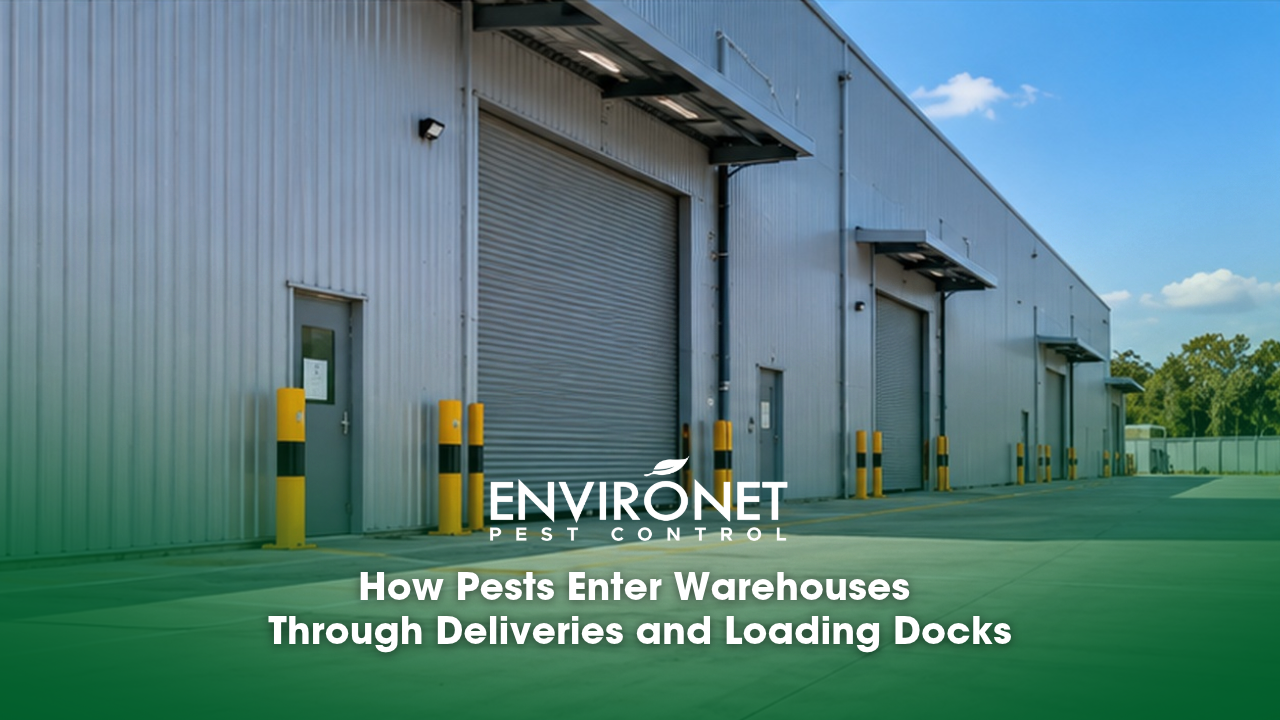
How Pests Enter Warehouses Through Deliveries and Loading Docks
Last updated on October 30th, 2026 at 10:30 am
Warehouses are designed to keep goods organized, accessible, and protected. However, one important area of pest prevention is often overlooked: the movement of products in and out of the facility.
Every delivery, shipment, and loading activity creates opportunities for pests to enter a warehouse.
Rodents, cockroaches, and stored-product insects may find their way inside through incoming materials, packaging, vehicles, and structural openings.
Understanding these risks is an important part of effective warehouse pest control.
1. Incoming Deliveries Can Introduce Pests
Not all pest problems originate inside a warehouse.
Some pests may arrive through deliveries, particularly when goods have been stored or transported under conditions that allow pest activity.
Potential warning signs include:
- Damaged cartons or packaging
- Insect activity around stored products
- Rodent droppings or gnaw marks
- Unusual holes or contamination in packaging
- Evidence of pest activity inside transport vehicles
Prevention Tip: Establish a receiving inspection procedure before incoming goods are transferred to their designated storage areas.
Suspicious or affected materials should be isolated and assessed according to facility procedures.
2. Loading Dock Doors Create Entry Opportunities
Loading docks are among the busiest parts of industrial and logistics facilities.
With trucks arriving and departing throughout the day, doors may remain open for extended periods.
These openings can provide access for rodents, flies, and other pests, particularly when gaps exist around dock equipment and door seals.
To reduce entry risks:
- Keep loading dock doors closed when not in use.
- Inspect dock seals and weatherstripping regularly.
- Repair damaged door sweeps and structural openings.
- Maintain cleanliness around receiving bays.
- Monitor pest activity near frequently used entrances.
Even a well-maintained warehouse may experience pest problems when entry points are left unaddressed.
3. Pallets and Packaging Can Provide Shelter
Wooden pallets, cardboard boxes, and packaging materials are essential in many warehouse operations.
However, accumulated or undisturbed materials may also provide hiding places for pests.
Damaged cartons, unused pallets, and excess packaging can make pest activity harder to detect.
Prevention Tip: Remove unnecessary packaging promptly, organize pallet storage, and maintain accessible spaces for routine inspection and cleaning.
Inspect reusable pallets and incoming materials for evidence of pests.
4. Waste Around Receiving Areas Attracts Pests
Loading and receiving operations often generate plastic wrapping, cartons, damaged goods, and other waste materials.
When waste is allowed to accumulate, it can provide shelter and, depending on the materials involved, attract pests.
Facilities should establish a waste management procedure that includes regular collection, proper containment, and cleaning around disposal areas.
Waste storage locations should also be monitored for signs of rodent or insect activity.
5. Pest Prevention Should Be Part of Receiving Operations
Warehouse pest control is more effective when preventive measures are integrated into daily procedures.
Receiving personnel, warehouse supervisors, maintenance teams, and pest management providers all have important roles.
A practical prevention routine may include:
- Inspecting incoming shipments and packaging.
- Checking loading dock doors and seals.
- Reporting suspicious pest activity immediately.
- Maintaining proper storage and housekeeping.
- Coordinating regular professional pest inspections.
These simple practices can help identify potential risks before they affect larger sections of the warehouse.
Why Professional Warehouse Pest Control Matters
Warehouse pest management involves more than treating visible infestations.
Professional inspections help identify pest activity, potential entry points, and environmental conditions that may contribute to recurring problems.
Depending on the facility’s requirements, appropriate solutions may include monitoring, exclusion recommendations, sanitation improvements, and targeted pest control treatments.
A preventive approach helps protect inventory, support operational efficiency, and reduce pest-related disruptions.
Protect Your Warehouse Before Pest Problems Spread
Every delivery is an essential part of business operations, but it should not become an unnoticed entry point for pests.
By combining proper receiving procedures, facility maintenance, and professional pest management, businesses can strengthen their warehouse protection practices.
Environet Pest Control provides professional pest management solutions for warehouses, logistics centers, and industrial facilities. Book your FREE consultation today!