Reactive vs. Preventive Pest Control for Businesses
Last updated on October 5th, 2026 at 09:14 am
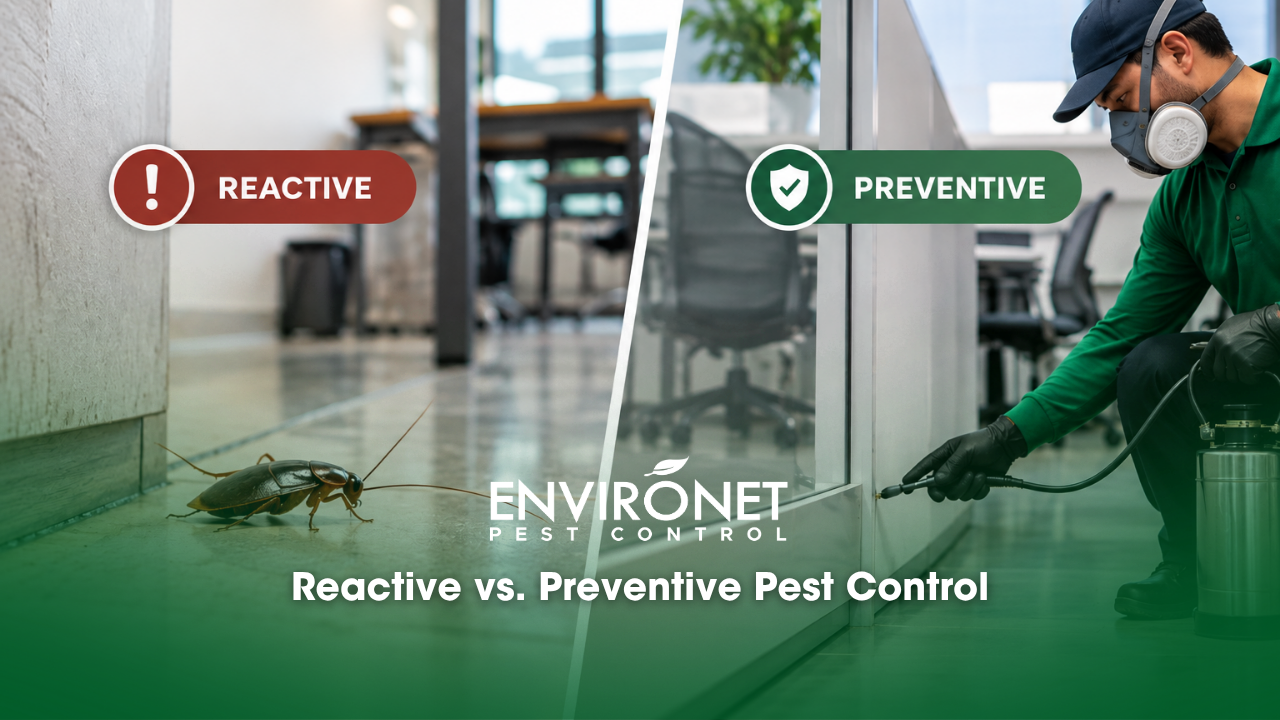
A cockroach appears in the office pantry. Someone notices rodent droppings in a storage room. Termite activity is discovered in part of the building.
The usual response is simple: call pest control.
Addressing an existing pest problem is important, but businesses should not always have to wait until pests become visible before taking action.
This is where understanding the difference between reactive and preventive pest control becomes useful.
What Is Reactive Pest Control?
Reactive pest control begins after pest activity has already been noticed or confirmed.
For example:
• Employees repeatedly see cockroaches in a pantry
• Rodent droppings are discovered in storage
• Ants begin appearing around work areas
• Termite activity becomes visible
• Flies become a recurring problem
At this point, the goal is to identify the pest problem and determine an appropriate treatment.
Reactive treatment is sometimes necessary. However, relying only on this approach means the business may not take action until the pest problem has already developed.
What Is Preventive Pest Control?
Preventive pest control takes a more proactive approach.
Instead of waiting for obvious pest activity, businesses regularly look for conditions that may encourage pests and signs that activity is beginning.
This may include:
• Regular inspections
• Pest monitoring
• Identifying possible entry points
• Improving sanitation practices
• Managing waste properly
• Addressing moisture and standing water
• Reducing clutter and possible hiding places
• Applying appropriate pest control measures when needed
The goal is to reduce pest risks and identify concerns as early as possible.
Why Waiting Can Be a Problem
Many pests are good at remaining hidden.
Cockroaches can stay inside cracks and concealed spaces. Rodents may move through ceilings or utility areas. Termites can remain inside affected materials before obvious damage becomes noticeable.
Seeing one pest may not always reveal the full extent of activity elsewhere in the property.
Waiting until pests become highly visible can therefore mean the problem has had more time to develop.
Prevention Supports Better Facility Management
Preventive pest management does not work separately from the rest of the facility.
Sanitation, waste management, maintenance, storage practices, landscaping, and pest control all play a role.
For example, treating cockroaches without addressing food residue or moisture may leave conditions that continue to support pest activity.
Likewise, rodent control can be more effective when possible entry points and food sources are also addressed.
This is why pest management should be considered part of a property’s overall maintenance practices.
Does Preventive Pest Control Mean You’ll Never Have Pests?
No pest management program can reasonably guarantee that a commercial property will never encounter a pest.
Deliveries, neighboring properties, weather, structural conditions, human activity, and other environmental factors can introduce new pest risks.
The advantage of prevention is that businesses are actively looking for these risks instead of waiting for them to become obvious problems.
Reactive or Preventive: Which Approach Should Businesses Use?
Both approaches have a role.
When an active infestation exists, appropriate treatment is necessary. But once the immediate problem is addressed, businesses can benefit from shifting their attention toward prevention and monitoring.
A practical commercial pest management strategy therefore combines:
Treatment when needed + monitoring + prevention + facility cooperation
Rather than thinking of pest control as something to call only during an infestation, businesses can make pest management part of regular property care.
Move From Reaction to Prevention
If pest control only becomes a priority when pests are already visible, it may be time to reconsider how your facility manages pest risks.
Environet Pest Control can help businesses identify pest concerns and determine appropriate pest management solutions for their properties.
Book a FREE consultation today.