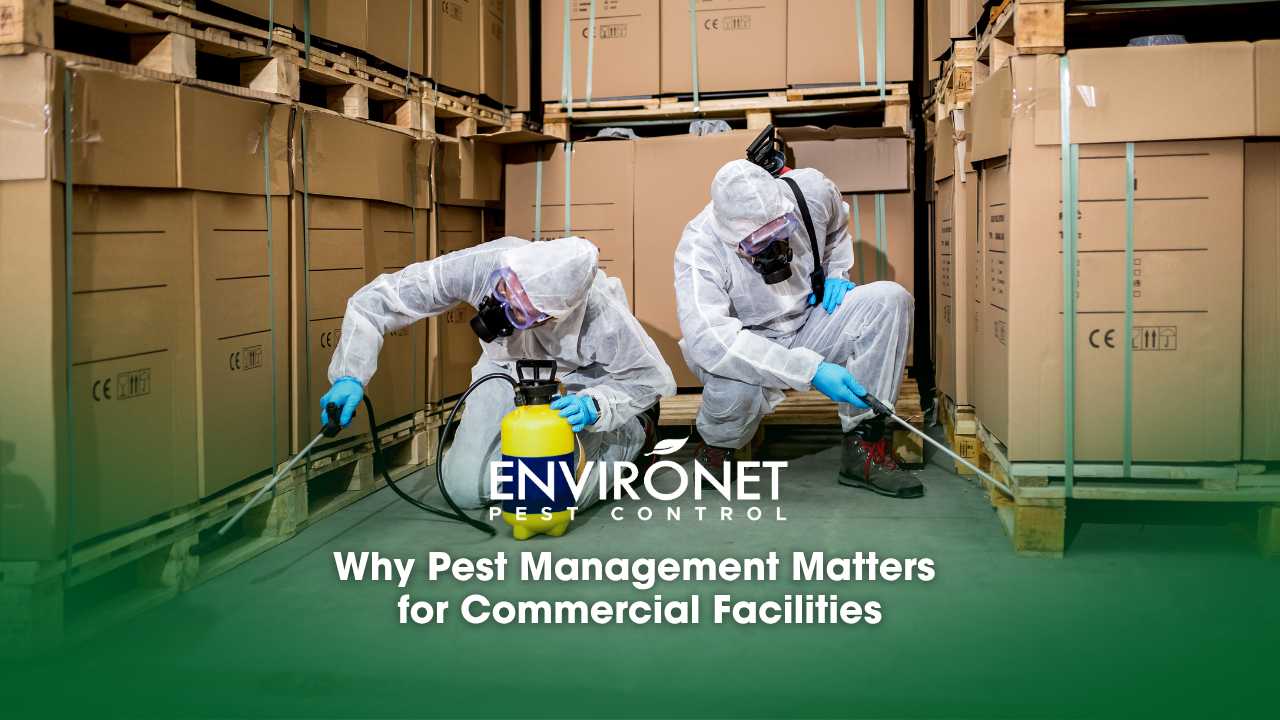
Why Pest Management Matters for Commercial Facilities
A pest sighting inside a commercial facility may appear to be a simple sanitation issue.
For businesses, however, pest activity can affect much more than cleanliness.
Depending on the property and industry, an unmanaged pest problem may affect employees, customers, products, equipment, facilities, daily operations, and even the reputation of the organization.
This is why pest management should be considered part of preventive facility management.
Pest Problems Can Become Business Problems
Commercial properties often provide pests with several things they need to survive.
These may include food, water, shelter, storage areas, drainage systems, waste areas, landscaping, loading zones, kitchens, stockrooms, and areas with limited human activity.
Without proper monitoring, pest activity can sometimes develop unnoticed.
The issue becomes more serious when pests begin affecting normal operations.
1. Pest Activity Can Affect Your Facility
Pests may enter buildings through small openings, drainage systems, delivery areas, damaged seals, doors, windows, utility lines, and other access points.
Once inside, they may hide in places such as:
• Storage rooms
• Kitchens and pantries
• Ceiling spaces
• Utility areas
• Warehouses
• Cabinets
• Drainage systems
• Areas behind equipment
Regular monitoring helps identify possible pest activity before it becomes more widespread.
2. Pests Can Affect Employees and Customers
Employees and customers expect commercial facilities to maintain a clean and properly managed environment.
Visible pest activity can quickly create discomfort.
Imagine a customer seeing a cockroach inside a restaurant, an employee noticing rodent droppings in a pantry, or a visitor encountering pests inside a lobby or restroom.
Even a single sighting can influence how people perceive the cleanliness and management of a facility.
3. Pest Activity Can Affect Business Reputation
Today, customer experiences can quickly become public through online reviews, social media posts, photos, and videos.
A pest complaint can damage trust, particularly for businesses operating in food service, hospitality, healthcare, retail, property management, and other customer-facing industries.
Preventive pest management can help businesses reduce these risks.
4. Certain Pests Can Damage Property and Products
Pests are not only a nuisance.
Rodents may gnaw on packaging, materials, and other items.
Termites can damage materials containing cellulose.
Stored product pests may affect certain food products.
Other pests may contaminate areas where products or materials are stored.
For businesses, this may lead to damaged inventory, additional cleaning, repairs, disposal, and operational disruption.
5. Pest Problems Can Interrupt Operations
A serious infestation may require areas to be cleaned, treated, repaired, inspected, or temporarily restricted.
These interruptions can affect:
• Work schedules
• Customer service
• Production
• Food preparation
• Deliveries
• Storage
• Facility access
Preventing pest problems is often easier than dealing with the disruption caused by a major infestation.
Reactive Pest Control vs. Preventive Pest Management
Reactive pest control happens when action is taken only after pests become visible.
Preventive pest management focuses on identifying risks before pest activity becomes more serious.
This may involve:
• Routine inspection
• Monitoring
• Identification of pest activity
• Evaluating possible entry points
• Reviewing sanitation conditions
• Identifying food and water sources
• Treatment when appropriate
• Follow-up recommendations
• Documentation and monitoring
The goal is not simply to respond to individual pests.
The goal is to create an environment where pest activity is less likely to develop.
Who Should Be Involved in Pest Management?
Pest management should not be viewed as the responsibility of only one department.
Depending on the organization, several teams may play a role.
These may include:
• Facility managers
• Property managers
• Office administrators
• Operations teams
• Procurement teams
• Maintenance personnel
• Housekeeping teams
• Business owners
Employees should also know how and where to report pest sightings.
The earlier pest activity is reported, the sooner it can be assessed.
What Should Businesses Look for in a Pest Management Provider?
Commercial pest management should begin with understanding the facility and its specific pest concerns.
Businesses should look for a provider that can:
• Gather relevant information about the property
• Identify possible pest concerns
• Conduct inspections when necessary
• Recommend an appropriate treatment approach
• Explain the service process clearly
• Provide monitoring or follow-up when applicable
Every facility is different.
The appropriate pest management approach should consider the type of property, pest involved, level of activity, operational requirements, and other relevant conditions.
Pest Management Should Be Part of Facility Protection
A pest problem is not only a sanitation issue.
It can become an operational and reputational concern.
For commercial facilities, proactive pest management can help protect people, property, products, operations, and customer confidence.
Rather than waiting for pest activity to become difficult to manage, businesses can take a more preventive approach.
Looking for Pest Management Support for Your Facility?
Environet Pest Control works with commercial establishments and organizations to understand their pest concerns and recommend appropriate pest management solutions. Book now!
Prevention Is Part of Pest Management
Effective pest management is not only about eliminating pests.
It also involves reducing the conditions that allow pests to enter, survive, and reproduce.
Good preventive practices may include:
• Proper waste management
• Regular cleaning
• Correct food storage
• Repairing leaks
• Removing standing water
• Sealing potential entry points
• Reducing unnecessary clutter
• Regularly inspecting vulnerable areas
• Monitoring for signs of pest activity
Businesses may also benefit from establishing a regular pest management and monitoring program instead of waiting for a serious infestation before taking action.
Do Not Ignore a Pest Problem That Keeps Returning
Recurring pest activity should not automatically be considered normal.
If the same pest problem continues to appear, there may be an underlying condition that needs to be identified.
Understanding the source of the problem is an important step toward choosing the appropriate solution.
Need Help With a Recurring Pest Problem?
Environet Pest Control can help assess your pest concern and recommend an appropriate pest management approach for your property. FREE Consultation.